
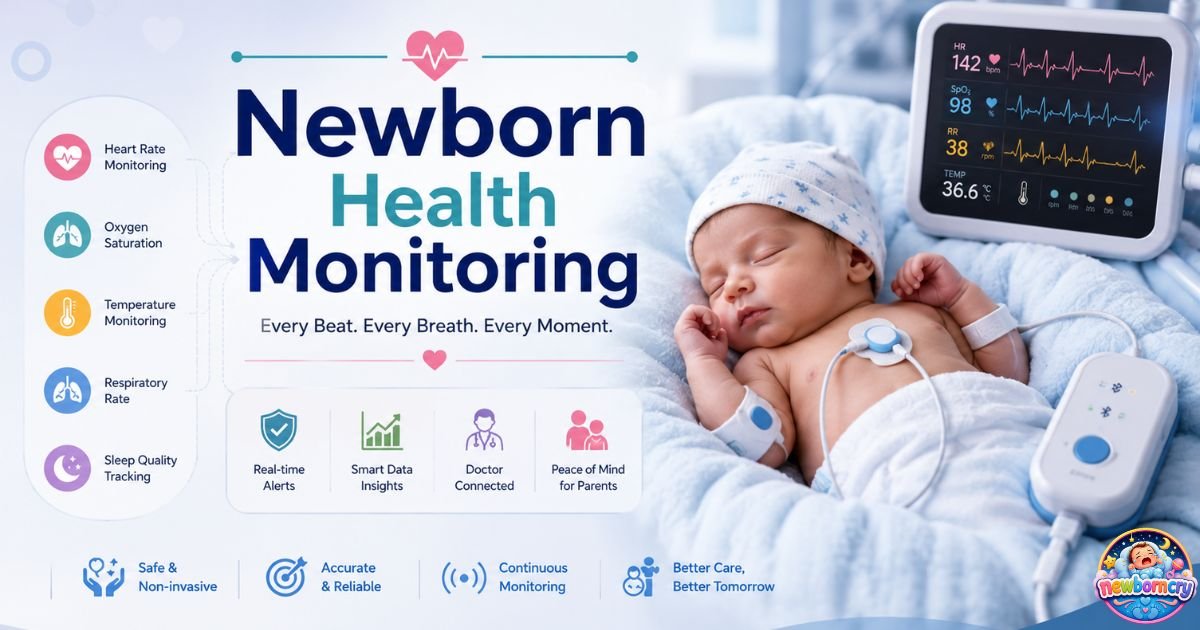
Bringing your newborn home is filled with joy, but also plenty of “Am I doing this right?” moments. You watch every little sound, every feed, and every nap, wondering if everything is okay. That’s where newborn health monitoring comes in. It’s not about becoming a doctor overnight—it’s about learning simple, practical ways to keep your baby safe and thriving in those precious first weeks and months.
With today’s best practices, most parents feel confident once they know exactly what to look for. This guide covers everything you need: the key things to track daily, what normal looks like, warning signs, and how routine check-ups fit in. You’ll finish feeling prepared, calm, and ready to enjoy every milestone.
Table of Contents
What Is Newborn Health Monitoring?
Newborn health monitoring means regularly checking your baby’s growth, feeding, sleep, and general well-being to catch any small issues early. It combines what you do at home every day with the professional checks at well-baby visits.

It’s not complicated. Most of it is simply observing patterns in feeding, diapers, weight, temperature, skin color, breathing, and activity. These quick daily checks help ensure your baby is gaining strength and developing as expected.
Why Newborn Health Monitoring Matters in the Early Weeks
The first month is a time of huge adjustment. Babies lose some weight after birth and then regain it. Their bodies are learning to breathe, digest milk, and regulate temperature.
Consistent monitoring helps catch common issues like poor weight gain, jaundice, or feeding difficulties early. According to the American Academy of Pediatrics (AAP), regular monitoring in the newborn period significantly supports healthy development. The Mayo Clinic also recommends daily observation of feeding and diaper output as key indicators of a baby’s well-being.
Key Areas to Monitor at Home
You don’t need fancy equipment—just your eyes, a notebook (or phone notes), and a reliable thermometer. Here are the most important things to track daily:
Feeding and Weight Gain
- Most newborns feed 8–12 times in 24 hours.
- Look for strong sucking, swallowing sounds, and contentment after feeds.
- Babies should regain their birth weight by 10–14 days and then gain about 20–30 grams per day.
- Track wet and dirty diapers as a sign of good intake (more on that below).
Diaper Output
After day 4, expect:
- At least 6–8 wet diapers per day.
- 3–4 bowel movements (yellow and seedy is normal for breastfed babies). Fewer than this can signal dehydration or low intake—contact your provider right away.
Use our free tool and find out How Many Diapers Does a Newborn use Per Day?
Sleep Patterns
Newborns sleep 14–17 hours a day, waking every 2–3 hours to feed. Safe sleep means back sleeping in a bare crib or bassinet.
Temperature
Normal under-arm temperature is 36.5–37.5°C (97.7–99.5°F). Always use a digital thermometer for accuracy. A rectal temperature over 38°C (100.4°F) in a baby under 2 months needs immediate medical attention.
Read our detailed blog on Finding the Right Room Temperature for Newborn Sleep
Skin Color and Jaundice
Mild yellowing on the face and chest is common around day 2–3. It should fade by day 7–10. Watch if it spreads to arms and legs or if your baby seems very sleepy or feeds poorly.
Read our detailed blog on Juandice overview.
Breathing and Activity
Normal newborn breathing can be fast and irregular. Count breaths for a full minute—under 60 per minute is typical when calm. Floppy limbs, excessive sleepiness, or difficulty waking for feeds are red flags.
For more on safe sleep routines, see our guide to newborn sleep safety.
Routine Well-Baby Visits: Your Professional Safety Net
Professional newborn health monitoring follows a clear schedule based on current guidelines:
- First visit: 3–5 days after birth (especially important if you left the hospital early).
- Then: 1 month, 2 months, 4 months, 6 months, 9 months, and 12 months.
At each visit, the provider checks:
- Weight, length, and head growth.
- Developmental milestones.
- Feeding and sleep patterns.
- Vaccinations and screenings.
These visits are also your chance to ask every question. Many parents say they feel much more relaxed after the first couple of appointments.
Common Concerns and When to Seek Help
Most days will be perfectly normal, but knowing warning signs gives you confidence. Contact your healthcare provider right away if you notice:
- Fewer than 6 wet diapers in 24 hours after day 4.
- Baby refuses feeds or seems too sleepy to wake for them.
- Fever (rectal temperature 38°C / 100.4°F or higher) in a baby under 2 months.
- Fast or difficult breathing, grunting, or blue lips/tongue.
- Jaundice that worsens or appears after day 7.
- Extreme fussiness or a high-pitched cry that doesn’t stop.
- Vomiting more than half of feeds repeatedly.
Trust your instincts. If something feels off, call. Early action prevents most problems from growing.
Practical Home Monitoring Tips for New Parents
Make newborn health monitoring part of your daily rhythm without stress:
- Keep a simple daily log (feed times, wet diapers, weight if you have a scale).
- Use a soft cloth to gently clean after feeds—no special tools needed.
- Check skin folds daily for irritation.
- Offer skin-to-skin contact to help regulate temperature and encourage feeding.
- Learn your baby’s hunger cues (rooting, hand-to-mouth, fussing) before full crying starts.
Breastfeeding or formula questions? A quick chat with a lactation consultant can make a big difference. Check our breastfeeding tips for newborns.
Busting Common Myths About Newborn Health Monitoring
- Myth: You need expensive baby monitors to keep your baby safe. Reality: For healthy babies, simple observation is enough. Home cardiorespiratory monitors are not recommended for SIDS prevention.
- Myth: All crying means something is wrong. Reality: Newborns cry to communicate hunger, tiredness, or discomfort. Persistent high-pitched crying or lethargy needs checking.
- Myth: Weight checks at home replace doctor visits. Reality: Professional measurements and full exams are essential. Home scales are helpful but not a substitute.
Long-Term Benefits of Consistent Newborn Health Monitoring
Staying on top of monitoring in the early weeks sets your baby up for healthy growth throughout infancy. It also helps you spot patterns early—whether it’s a minor feeding tweak or something that needs professional support.
By following today’s best practices and attending all well-baby visits, most families move through the newborn stage feeling informed and empowered.
Key Takeaways
- Newborn health monitoring is simple daily observation of feeding, diapers, sleep, temperature, and activity.
- Track wet diapers (6–8+ per day), weight regain by 10–14 days, and normal feeding cues.
- Know clear red flags: fever over 38°C, poor feeding, breathing changes, or worsening jaundice.
- Attend every well-baby visit—starting with the 3–5 day check.
- Trust your instincts and reach out to your healthcare provider whenever something feels off.
- With today’s guidelines, consistent monitoring keeps most newborns healthy and thriving.
FAQ: Newborn Health Monitoring
1. How often should I check my newborn at home? Daily checks of feeds, diapers, and general alertness are ideal. Add a temperature check if your baby feels warm or seems unwell.
2. What is the first well-baby visit after birth? Most providers recommend a check 3–5 days after birth to ensure weight gain and rule out early issues like jaundice.
3. Do I need a baby monitor for newborn health monitoring? For healthy babies, no. Simple observation and safe sleep practices are the recommended approach.
4. When should I call the doctor about newborn health concerns? Anytime your baby has fewer wet diapers, won’t wake for feeds, has a fever, or you simply feel worried. It’s always better to check.
You’re already doing an amazing job by learning about newborn health monitoring. Those early weeks fly by, and with these practical tools you’ll feel confident every step of the way. Your healthcare team is there to support you—never hesitate to reach out.
Here’s to healthy days, peaceful nights, and lots of newborn snuggles ahead.
Disclaimer
This article is for informational and educational purposes only. It is not intended to replace professional medical advice, diagnosis, or treatment. Every baby is different, and newborn health concerns should always be evaluated by a qualified pediatrician or healthcare provider. Please consult your doctor for personalized advice regarding your child’s health.