
You just sat down to rest—maybe for the first time all day—when you look at the clock and do the math. It has been three hours since the last feed. Your baby is peacefully asleep in the bassinet, but suddenly a wave of anxiety hits you. Should I wake them? Should I pump? What if my milk supply dips?
If this internal monologue sounds familiar, you are not alone.
The early days of breastfeeding are often a blur of cluster feeding, sleep deprivation, and conflicting advice. One of the biggest sources of stress for new mothers is figuring out the logistics of feeding. You want to breastfeed, but you also want to build a small stash of milk for emergencies, or perhaps your partner wants to help with a night feed.
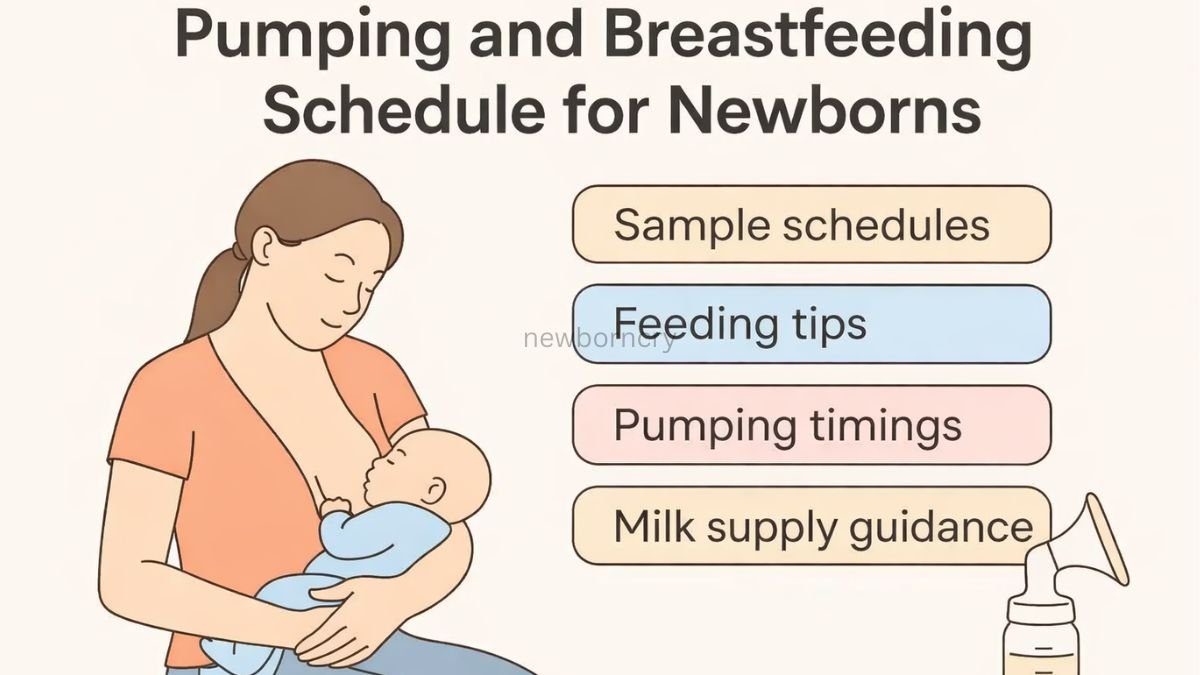
The truth is, there is no one-size-fits-all approach. However, having a structured pumping and breastfeeding schedule for newborns can be the difference between feeling overwhelmed and feeling confident. This guide will walk you through how to establish a rhythm that protects your milk supply, keeps your baby fed, and preserves your sanity.
Why a Schedule Matters (But Not the Way You Think)
When we hear the word “schedule,” many of us imagine a rigid, by-the-clock system. With a newborn, rigidity is often the enemy of success. Instead, think of this as a flexible framework.

In the first few weeks, your body is essentially “learning” how much milk your baby needs. Milk production operates on a simple principle: supply and demand. If milk is removed frequently (either by a nursing baby or a breast pump), your body gets the signal to produce more. If milk stays in the breast for too long, it signals your body to slow down production.
A well-planned pumping and breastfeeding schedule for newborns helps you maintain that frequency without burning out. It ensures you are emptying your breasts regularly, which prevents engorgement, mastitis, and low supply.
The First Two Weeks: Focus on Latch, Not Stash
Before you reach for the pump, it is crucial to establish a foundation. For the first two to four weeks, your primary goal should be nursing your baby on demand. If you need extra support during this time, these breastfeeding tips for new moms cover everything from achieving a deep latch to recognizing hunger cues.
- Why wait? Introducing a pump too early can lead to an oversupply, which sounds great but can actually cause painful engorgement and make it difficult for your baby to latch.
- What to do: Let your baby nurse whenever they show hunger cues (smacking lips, rooting, putting hands in mouth). This is usually 8 to 12 times in a 24-hour period.
- The exception: If your baby is having trouble latching, or if you are separated from your baby due to medical reasons, start pumping immediately to establish supply. According to the American Academy of Pediatrics (AAP), early and frequent milk removal is critical in these scenarios to ensure long-term breastfeeding success.
Creating Your Personalized Schedule
Once breastfeeding is established (your baby is gaining weight well and nursing effectively), you can introduce a pump. Here is how to build a sustainable pumping and breastfeeding schedule for newborns that fits into your life.
1. The Morning “Stash” Session
Most mothers produce the highest volume of milk in the early morning hours (between 1 AM and 6 AM). This is due to prolactin levels, the hormone responsible for milk production, peaking during this time.
- The Strategy: After your baby’s first morning feed (usually between 4 AM and 7 AM), try pumping immediately afterward.
- Why it works: Your baby may only take one breast or not fully empty both sides during that sleepy morning feed. Pumping for 10–15 minutes after nursing tells your body to ramp up production for the day and allows you to collect a small stash without stealing milk from your baby’s next meal.
2. The Replacement Bottle Feed

Many mothers want to introduce one bottle a day—either to get a break or to prepare for returning to work. Instead of pumping in addition to nursing, you can pump instead of nursing.
- The Strategy: Choose one feeding session (usually in the evening or late afternoon when supply naturally dips) where your partner gives a bottle of expressed milk.
- The Logistics: While the baby takes the bottle, you sit down with your breast pump. You are replacing the nursing session with a pumping session.
- The Benefit: This maintains your milk supply because milk is still being removed at that time, but it allows someone else to bond with the baby and gives you a physical break.
3. The Power Hour
If you are struggling with low supply or trying to build a freezer stash quickly, a “power hour” can mimic cluster feeding.
- The Strategy: Set aside one hour in the evening. Pump for 10 minutes, rest for 10 minutes, pump for 10 minutes, rest for 10 minutes, pump for 10 minutes.
- Why it works: This pattern of frequent stimulation signals your body that the baby is going through a growth spurt and needs more milk. It is a temporary boost, not an everyday necessity for most moms.
How to Balance Breast and Bottle
A major concern for mothers using a combined routine is “nipple confusion” or a baby developing a preference for the bottle (which offers faster flow).
To ensure your baby continues to nurse effectively while following a pumping and breastfeeding schedule for newborns, use these techniques:
- Paced Bottle Feeding: Hold the baby upright. Let them suck on the bottle nipple and then tilt the bottle horizontal so they have to work for the milk, similar to breastfeeding. This prevents them from getting “lazy” at the breast.
- Slow Flow Nipples: Always use the lowest flow nipple (usually size 0 or 1) for newborns. If the milk comes out too fast from the bottle, they may get frustrated at the breast where they have to wait for a let-down.
- Never Skip Nursing: Especially in the first 6 weeks, try not to go longer than 4–5 hours without nursing or pumping. Skipping sessions frequently can signal your body to wean.
A Sample Daily Timeline
To give you a visual, here is what a flexible pumping and breastfeeding schedule for newborns might look like for a mother who is 4 weeks postpartum and wants to build a modest stash.
| Time | Activity |
|---|---|
| 6:00 AM | Baby wakes. Nurse on both sides. |
| 6:30 AM | Pump for 10–15 minutes (morning stash). |
| 9:00 AM | Nurse baby. |
| 12:00 PM | Nurse baby. |
| 3:00 PM | Nurse baby. |
| 6:00 PM | Partner feeds baby 3–4 oz bottle using paced method. Mom pumps for 20 minutes (replacement session). |
| 9:00 PM | Nurse baby (cluster feeding may occur here). |
| 12:00 AM | Nurse baby (dream feed). |
| 3:00 AM | If baby sleeps longer, mom may wake to pump for 10–15 mins to protect supply. |
Note: This is a template. If your baby cluster feeds (wants to eat every hour), drop the extra pump and focus on nursing. Cluster feeding is your baby’s way of naturally increasing your supply.
Troubleshooting Common Issues
Even with a solid plan, issues can arise. Here is how to handle them.
“I’m not pumping enough milk”
It is important to manage expectations. A breast pump is not as efficient as a healthy, nursing baby. Seeing only 0.5oz to 2oz combined after a nursing session is normal.
- Check your flange size: This is the most overlooked factor. A flange that is too big or too small can reduce output by up to 50%. Most pumps come with a standard 24mm or 28mm, but many women need smaller (21mm or 19mm).
- Hands-on pumping: Use your hands to massage your breasts while pumping. This helps empty the ducts more effectively.
“My baby won’t take a bottle”
Some breastfed babies refuse the bottle if it is introduced too late (after 8 weeks) or if they associate it with mom being away.
- Have someone else offer the bottle: Babies can smell milk on you. If mom leaves the room, or if dad/grandma offers the bottle, the baby is often more accepting.
- Try different temperatures: Some babies like the milk warmer than body temperature; others like it slightly cool.
“I’m exhausted”
If pumping feels like a chore that is stealing sleep, prioritize sleep. Cortisol (stress hormone) inhibits milk production. The Mayo Clinic highlights that maternal exhaustion is one of the biggest barriers to successful breastfeeding. If you are too tired to pump, skip the “extra” session and just nurse. Your mental health is a critical component of your milk supply.
Planning for the Future
As your baby grows, their feeding habits change. The schedule you use at 2 weeks will look different than at 3 months.
- Weeks 1–4: Focus on latching and on-demand nursing. Introduce 1 pumping session if desired for stash building.
- Weeks 5–8: Establish a rhythm. If returning to work soon, start adding 1–2 pumping sessions to mimic the workday schedule.
- Months 3–6: Your supply regulates. You can likely drop the middle-of-the-night pump if baby is sleeping longer stretches without hurting your supply, as long as you are emptying well during the day.
Key Takeaways
Creating a successful routine requires flexibility and self-compassion.
- Establish breastfeeding first. Wait 2–4 weeks to introduce a pump unless medically necessary.
- Replace, don’t add. To avoid oversupply or burnout, pump instead of a nursing session rather than always pumping after nursing.
- Morning is golden. The easiest time to pump extra milk is after the first morning feed.
- Protect your sleep. A few missed pumping sessions are okay; chronic exhaustion is not.
- Get support. If you are experiencing pain or struggling with output, consult a lactation consultant.
Frequently Asked Questions (FAQ)
1. How long should a pumping session last for a newborn?
If you are pumping in addition to nursing, aim for 10 to 15 minutes per session. If you are replacing a full feed (i.e., you are away from the baby), pump for 15 to 20 minutes, or until the milk flow slows down significantly. Do not pump for longer than 30 minutes at a time, as this can damage breast tissue and cause unnecessary soreness.
2. Will pumping too early cause oversupply?
Yes, it can. If you are exclusively breastfeeding a baby who is gaining weight well and you add aggressive pumping sessions in the first few weeks, you may create an oversupply. While oversupply ensures the baby gets enough, it can lead to recurrent plugged ducts, mastitis, and a baby who struggles with a forceful let-down. It is best to wait until breastfeeding is well-established before introducing regular pumping.
3. How do I know if my baby is getting enough milk if I am also pumping?
Track wet diapers and weight gain. If your baby is having 6–8 heavy wet diapers per day and is steadily gaining weight according to their pediatrician, they are getting enough milk. Do not use the amount you pump as a measure of how much the baby gets while nursing—babies are far more efficient than pumps. If you want a quick reference on typical intake amounts by age, see our guide on how much breastmilk should a newborn eat chart.
4. Do I need to wake my newborn to pump or feed at night?
In the first few weeks, you should not let a newborn go longer than 4 hours without feeding. If your baby is sleeping a long stretch, you should wake them to nurse. However, if you are trying to maintain supply and the baby is sleeping, you may need to wake up to pump to prevent engorgement and a dip in supply. Once your baby is back to birth weight and gaining well (usually by 2 weeks), your pediatrician will usually give you the green light to let them sleep, and you can follow their lead.
Disclaimer: This article is for informational purposes only and does not constitute medical advice. Always consult with a lactation consultant or your pediatrician regarding your specific health needs and your baby’s feeding plan.
1 thought on “How to Create a Realistic Pumping and Breastfeeding Schedule for Newborns”