
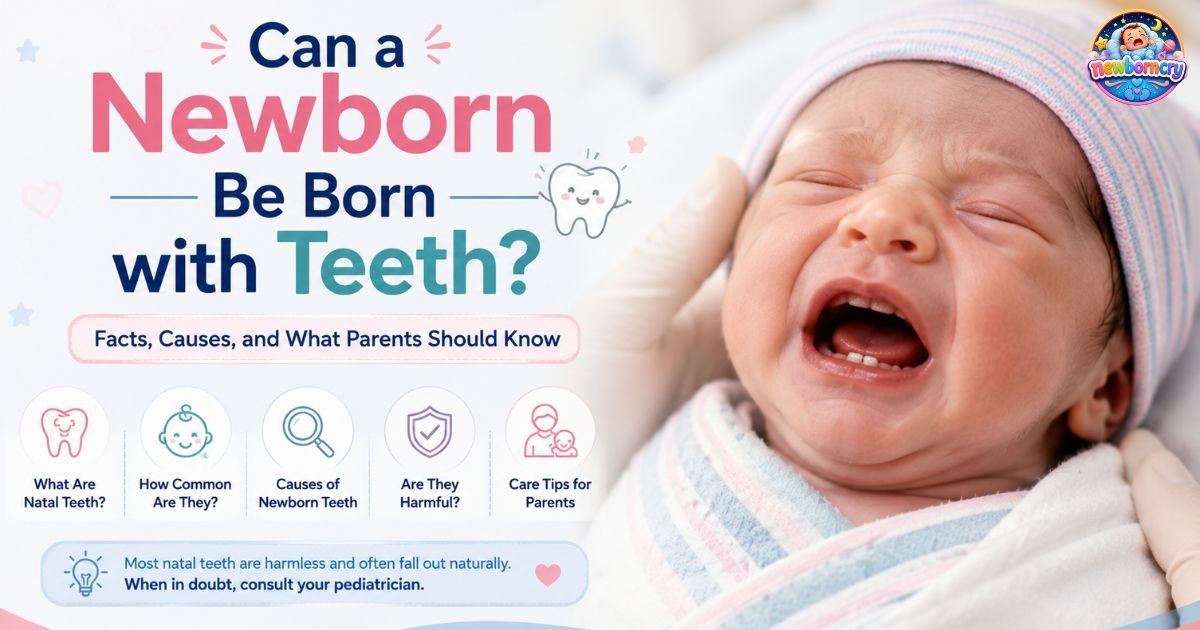
Imagine this: your little one has just arrived, and during those first precious moments, you notice something unexpected—a tiny tooth already peeking through their lower gums. It can feel surprising, even a bit alarming. Many new parents wonder, can a newborn be born with teeth?
The good news? It happens more often than you might think, and in most cases, it’s a harmless quirk of development rather than a serious problem. With today’s best practices and a bit of guidance from trusted experts, you can handle it confidently while keeping your baby healthy and comfortable. This guide walks you through everything you need to know, from what these early teeth look like to practical steps for care.
Table of Contents
What Are Natal Teeth?
Natal teeth are simply teeth that are already present when a baby is born. They’re different from the usual baby teeth that typically start appearing around six months of age. Sometimes called “congenital teeth,” they most often show up as the two lower front incisors—the central ones in the bottom jaw.
There’s also a related but separate term: neonatal teeth, which erupt during the first month of life. Natal teeth are about three times more common than neonatal ones.
These early teeth are usually part of your baby’s normal set of 20 primary (baby) teeth. In rare cases, they might be extra (supernumerary) teeth. Either way, they tend to be smaller, softer, and less firmly rooted than typical baby teeth.
How Common Is It for a Newborn to Have Teeth?
The question can a newborn be born with teeth comes up often because the condition is uncommon—but not extremely rare. Current estimates put the occurrence at roughly 1 in 2,000 to 3,500 births, though some recent worldwide analyses suggest it could be closer to 1 in 289 in certain populations.
They appear more frequently in girls than boys and often run in families. If you or your partner had natal teeth as a baby, there’s a higher chance your little one might too. Most babies arrive with just one or two teeth, though a few have more. Full sets at birth are virtually unheard of.
What Do Natal Teeth Look Like?
These early arrivals aren’t the strong, white teeth you see in older toddlers. Here’s what parents typically notice:
- Location: Almost always the lower central incisors.
- Appearance: Small, cone-shaped or shell-like, with a yellowish or translucent color.
- Texture: Softer enamel and roots that may not be fully developed, which can make them feel wobbly.
- Number: Usually one or two, though pairs are common.
Because the roots are often underdeveloped, the teeth can be quite mobile. This is one reason why quick evaluation matters.
Possible Causes and Risk Factors
Experts still don’t know the exact reason why some babies develop natal teeth, but latest research points to a few key factors. The most widely accepted explanation is a superficial position of the tooth germ (the early tooth bud) during development, allowing it to erupt early.
Other contributing elements can include:
- Genetic or familial tendencies (up to 60% of cases have a family history).
- Certain developmental conditions or syndromes (though most cases are isolated).
- Hormonal influences or nutritional factors during pregnancy.
Importantly, having natal teeth rarely signals a bigger health issue on its own. Most babies with them are otherwise perfectly healthy.
Signs, Symptoms, and Potential Challenges
In many cases, natal teeth cause no problems at all. Your baby may feed, sleep, and grow just fine. But because these teeth are immature, a few common concerns can arise:
- Feeding difficulties: Sharp edges might irritate your nipple during breastfeeding or make latching tricky for your baby.
- Tongue or gum injury: Constant rubbing can lead to a small ulcer on the underside of the tongue, known as Riga-Fede disease.
- Looseness and safety: Very mobile teeth carry a small risk of coming loose and being swallowed or inhaled.
- Enamel concerns: The teeth may have thinner enamel, making them more prone to wear or sensitivity later.
If your newborn seems fussy during feeds, has trouble latching, or you notice any redness or sores in their mouth, it’s worth a closer look.
When to Seek Professional Evaluation
The moment you spot a tooth (or even suspect one), schedule a check with your baby’s healthcare provider or a pediatric dentist. Early assessment is one of today’s best practices.
During the visit, the professional will:
- Examine the teeth for mobility and shape.
- Possibly take a gentle X-ray to check root development and confirm whether it’s a normal or extra tooth.
- Rule out any linked conditions if needed.
Don’t wait if you see signs of discomfort, excessive looseness, or feeding issues. Prompt care prevents small problems from growing. For more on routine newborn checks, see our guide to newborn health monitoring.
Treatment and Management Options
The goal with natal teeth is simple: keep your baby safe and comfortable while supporting healthy oral development.
Observation is often the first choice. If the teeth are stable, not causing pain or injury, and your baby feeds well, many experts recommend leaving them in place. They may fall out naturally or integrate into the normal teething timeline.
When intervention helps:
- Smoothing sharp edges to protect breastfeeding or prevent ulcers.
- Extraction if the tooth is extremely loose, supernumerary, or interfering with feeding or safety. This is usually a quick, straightforward procedure done with local care.
Current guidelines emphasize involving a pediatric dental specialist early. Extraction, when needed, is typically delayed a short time after birth to allow natural clotting factors to develop fully.
For breastfeeding support during this time, check our practical breastfeeding tips for newborns.
Caring for a Baby with Natal Teeth at Home

You don’t need special equipment—just gentle, consistent care:
- Gentle cleaning: Wipe gums and any teeth with a clean, damp cloth after feeds. Once teeth are present, a tiny smear of fluoride toothpaste on a soft brush or finger brush is safe and recommended by leading pediatric health resources.
- Monitor mobility: Check daily for excessive wobbling. Note any changes in feeding or fussiness.
- Comfort measures: If sharp edges bother your baby, a chilled (not frozen) teething ring or clean, cool washcloth can soothe gums.
- Breastfeeding adjustments: Work with a lactation consultant if latch issues arise. Many mothers find small positioning tweaks make a big difference.
Regular well-baby visits help track both general health and oral development.
Busting Common Myths
Let’s clear up a few misconceptions:
- Myth: Natal teeth always mean something is wrong. Reality: Most are simply an early start to normal teething.
- Myth: They must be pulled immediately. Reality: Only if they pose a clear risk—otherwise, monitoring is preferred.
- Myth: They’ll crowd future teeth. Reality: When they’re normal primary teeth, they usually don’t disrupt the permanent set.
Long-Term Outlook for Your Baby’s Smile
The vast majority of babies born with natal teeth go on to have perfectly healthy dental development. These early teeth may shed a bit sooner, but the permanent teeth that replace them typically arrive on schedule.
Continuing good oral habits—gentle cleaning, avoiding sugary drinks, and regular dental check-ups—sets your child up for a lifetime of strong teeth.
Leading pediatric health resources, including guidance from the American Academy of Pediatrics (AAP) and the Mayo Clinic, stress that early attention to any unusual findings helps everything stay on track.
Key Takeaways
- Natal teeth are rare but usually harmless teeth present at birth, most often the lower front incisors.
- They affect roughly 1 in 2,000–3,500 newborns and are often linked to family history.
- Most require only monitoring; extraction is reserved for cases involving looseness, feeding problems, or injury risk.
- Gentle home care and prompt professional check-ups keep your baby comfortable and safe.
- With today’s best practices, the long-term dental outlook is excellent for nearly all babies.
FAQ: Can a Newborn Be Born with Teeth?
1. Is it normal for a newborn to have teeth?
Yes, it’s uncommon but completely possible and usually not a cause for worry. These natal teeth are simply an early eruption of primary teeth.
2. Do natal teeth need to be removed?
Not always. If they’re stable and not causing feeding issues or injury, they can stay. A pediatric dentist will advise based on an individual exam.
3. Can natal teeth hurt breastfeeding?
Sometimes sharp edges can make latching uncomfortable. Smoothing the edges or adjusting positions often solves it quickly.
4. Will my baby have dental problems later because of natal teeth?
In most cases, no. With proper monitoring and routine care, future teeth develop normally. Regular dental visits from an early age help catch any minor issues.
If your newborn has arrived with a surprise tooth (or two), you’re not alone—and you’ve got this. Reach out to your healthcare team right away for personalized guidance. They’re there to support you every step of the way so you can focus on enjoying those early cuddles and milestones.
Disclaimer
This article is for informational and educational purposes only. It is not a substitute for professional medical or dental advice, diagnosis, or treatment. Natal teeth and newborn oral health can vary for each baby. Always consult your pediatrician or a qualified pediatric dentist for personalized advice regarding your child’s health.