
Hey there, new mom. Those first few weeks with your baby are filled with so many little surprises — and your baby’s skin is often one of the biggest ones. You might find yourself staring at your little one and wondering about every mark, bump, or change you see.
Rest easy. Most newborn skin concerns are completely normal and part of your baby’s adjustment to life outside the womb.
The information in this article is based on guidelines from the American Academy of Pediatrics (AAP).
Let’s walk through the most common newborn skin concerns together so you can feel confident about what you’re seeing.
Table of Contents
Why Your Newborn’s Skin Looks Different
Newborn skin is incredibly delicate and thin. It has spent nine months in a warm, wet environment — and now it is getting used to air, clothes, and all the new touches of the outside world.
Changes happen fast in those early days and weeks. Most of them go away completely on their own without any special treatment.
Your job is gentle care: lukewarm baths, fragrance-free products, and lots of love.
1. Normal Newborn Skin Peeling — One of the Most Common Newborn Skin Concerns
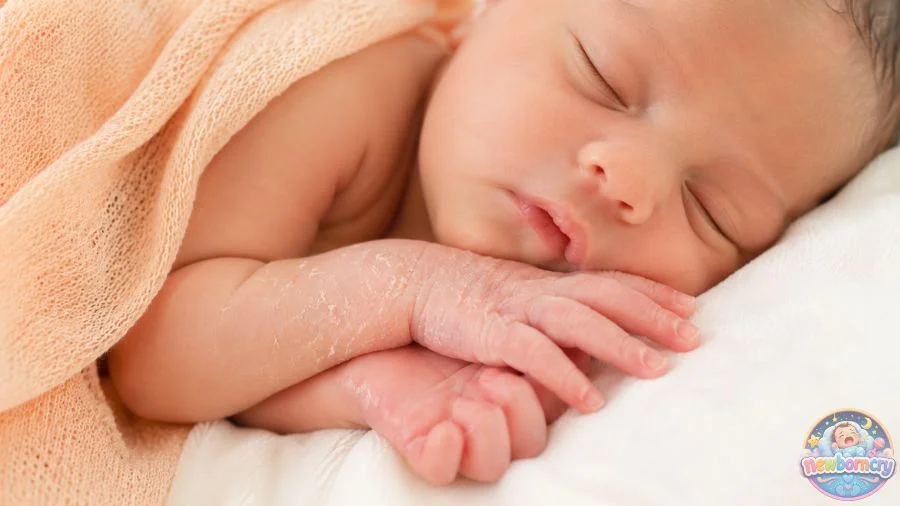
One of the first things many parents notice is dry, flaky skin. Your baby’s skin often starts peeling, especially on the hands, feet, and ankles. It can look a bit like skin coming off after a sunburn — but it’s usually mild and completely expected.
This is a normal transition as your baby sheds the outer layer from being in amniotic fluid. It happens more with babies born a little late or after their due date.
What to Do
- Keep baths short — 5 to 10 minutes is plenty
- Use a gentle, unscented moisturizer on dry areas
- No scrubbing or strong-smelling lotions
The peeling usually stops within one to two weeks, and your baby’s skin gets softer and smoother on its own.
2. Milia — Those Tiny White Bumps on the Nose and Cheeks\

Those little white or yellowish dots on your baby’s nose, cheeks, or chin? They are called milia. They look like tiny pearls under the skin and are very common — up to 40 to 50 percent of newborns get them.
Milia happen when tiny skin flakes get trapped in small pockets just under the surface. They are harmless and do not bother your baby at all.
What to Do
Nothing. No squeezing, poking, or creams needed. They clear up on their own in a few weeks without any help from you.
3. Baby Acne — Little Pimples Around 2 to 4 Weeks

Around two to four weeks old, some babies develop small red or white bumps on their cheeks, nose, and forehead. This is newborn baby acne — and it can look surprising but is completely common.
It comes from mom’s hormones still circulating in the baby’s system, which keep the oil glands active for a little while. The bumps might have tiny whiteheads or look red and irritated.
What to Do
- Keep the area clean with plain water during baths
- Skip acne creams, oils, or any special products
- Just wait — baby acne usually peaks and then fades by two months
Your baby stays happy through all of it.
4. Lip Blisters — Nursing Blisters From Feeding
You might spot a small blister or callus-like spot on your baby’s upper lip. These are often called nursing blisters or suck blisters. They happen from the strong sucking during feeding — and they are totally normal for eager little nursers.
Many parents worry these mean a bad latch. Usually they are just a sign your baby is working hard to feed. The blister might look whitish or clear and can come and go during the early weeks.
What to Do
Continue feeding normally. If you have ongoing latch concerns or pain, a lactation consultant can help make things more comfortable for both of you. The blisters heal quickly on their own.
5. Newborn Jaundice — The Yellow Tint
Many babies get a yellowish look to their skin and eyes in the first week. This is newborn jaundice, caused by a buildup of bilirubin as the liver adjusts to working outside the womb. It is very common and usually mild.
Watch for the yellow color starting in the face and moving downward toward the belly, arms, and legs. Most cases clear up naturally with feeding and time.
Use our free newborn jaundice risk calculator to help understand what your pediatrician might look for — and always follow your doctor’s advice on jaundice checks, especially in the first few days.
6. Erythema Toxicum — The Red Blotchy Rash
This one sounds fancy but is one of the most common newborn rashes. Erythema toxicum shows up as red blotches with small white or yellow centers — almost like tiny bug bites. It can appear on the face, body, arms, or legs.
It often shows up around day 2 or 3 and can come and go for a couple of weeks. It does not itch or bother your baby at all. No treatment is needed — it just fades away on its own.
7. Stork Bites and Salmon Patches
Those pink or red marks on the back of the neck, eyelids, or forehead? They are called stork bites or salmon patches. They are simply small collections of blood vessels close to the surface of the skin.
Very common — especially on fair-skinned babies. The ones on the face often fade in the first year or two. Neck ones might stick around a little longer but usually get covered by hair. They are harmless birthmarks.
8. Mongolian Spots — Good to Know
Some babies, especially those with darker skin tones, have bluish-gray patches on the lower back or bottom. These are called Mongolian spots. They can look like bruises at first glance, which sometimes worries parents and caregivers.
They are completely normal and fade over time — usually by school age. Just mention them at checkups so your doctor knows they are there and not bruises.
Other Common Newborn Skin Concerns
Your baby’s skin might also show:
- Heat rash — tiny red bumps in warm, creased areas like the neck or armpit
- Cradle cap — greasy yellow scales on the scalp, very common and easy to manage
- Mild diaper rash — redness in the diaper area, usually from moisture
All of these are manageable with gentle, consistent care. If any rash looks infected or your baby seems uncomfortable, check with your pediatrician.
For a full guide on breathing patterns and what else to watch in the early weeks, our newborn breathing guide covers everything in simple terms.
When to Call Your Pediatrician

Most newborn skin concerns are nothing to stress about. But trust your instincts as a parent. Contact your doctor right away if you notice:
- Fever or your baby seems sick or extra sleepy alongside any skin change
- Rash spreading quickly or looking infected — pus, swelling, or warmth around the area
- Jaundice getting worse after the first week or spreading to the hands and feet
- Blisters that seem painful or are not related to feeding
- Any skin change combined with poor feeding, vomiting, or breathing issues
For babies under one month old, it is always okay to call if something does not feel right. Your pediatrician is there to help you feel confident.
Simple Newborn Skin Care Tips
These habits make a real difference in the early weeks:
- Bathe your baby 2 to 3 times a week with warm water and mild, unscented soap
- Pat dry gently after baths — no rubbing
- Use a fragrance-free moisturizer on dry areas
- Dress your baby in soft, breathable fabrics
- Wash new clothes before putting them on your baby
- Avoid lotions or oils with strong scents or added chemicals
Simple and gentle is always the right approach with newborn skin.
You’ve Got This, Mama
Those little skin changes are just part of your baby’s beautiful beginning. Most newborn skin concerns are temporary and nothing to lose sleep over.
Give yourself grace, enjoy the snuggles, and reach out to your pediatrician whenever you need reassurance. Your love and attention are already making everything better.
Frequently Asked Questions
What are the white bumps on my newborn’s nose?
They are almost always milia — harmless tiny cysts that form when skin flakes get trapped under the surface. They clear up on their own in a few weeks with no treatment needed.
Is newborn skin peeling normal?
Yes, very normal. It is your baby’s skin adjusting after months in amniotic fluid. Moisturize gently with an unscented lotion and it will pass within one to two weeks.
Why does my baby have blisters on their lips?
Most often from nursing or strong sucking during feeding. They are very common, heal quickly on their own, and are not a sign that anything is wrong.
When should I worry about newborn skin?
Worry if the rash comes with a fever, your baby seems unwell or lethargic, or the skin looks infected with pus or swelling. Otherwise, most newborn skin changes are completely normal.
What does newborn baby acne look like?
Small red bumps or tiny whiteheads on the cheeks, nose, and forehead, appearing around 2 to 4 weeks old. It fades on its own without any treatment by around 2 months.
Written by S.A., founder of NewbornCry.com. Learn more about me here.
Medical Disclaimer: This article is for educational purposes only and is not a substitute for professional medical advice. Always consult your pediatrician with any concerns about your baby’s skin or health.