Table of Contents
Picture this: it’s the middle of the night, and your tiny newborn feels warmer than usual. Your heart races as you wonder if it’s a fever and what to do next. As a new parent, knowing how to bring down newborn fever safely can bring much-needed peace of mind while keeping your little one protected.
In this guide, you’ll find clear, step-by-step advice based on modern standards and latest research from trusted pediatric sources. We’ll cover everything from spotting the signs to supportive care at home — always with the emphasis on professional medical guidance first. Because when it comes to newborns, safety comes before everything else.
Understanding Fever in Newborns

A newborn’s body temperature can fluctuate naturally, but a true fever signals that their immune system is responding to something, often an infection. According to current guidelines, a rectal temperature of 100.4°F (38°C) or higher counts as a fever in babies under three months.
Newborns have immature immune systems, so even a mild fever deserves quick attention. Common triggers include viruses, bacteria, or even reactions after vaccinations — but only a healthcare professional can determine the cause.
Pro tip: Always use a digital rectal thermometer for the most accurate reading in newborns. Forehead or underarm methods can be less reliable at this age.
If you’re unsure what counts as concerning, check our guide on what is a high fever for a newborn.
When to Seek Immediate Medical Help
This is the most important part of learning how to bring down newborn fever — knowing when to stop home efforts and get professional care right away.
Today’s best practices are very clear: any fever in a baby younger than three months requires an immediate call to your pediatrician or a visit to the emergency department. Do not wait to see if it goes down on its own.
Contact medical help right away if your newborn:
- Has a rectal temperature of 100.4°F (38°C) or higher
- Seems unusually sleepy, irritable, or difficult to wake
- Has trouble feeding or fewer wet diapers than usual
- Shows any breathing changes, rash, or vomiting
Leading sources like the Mayo Clinic stress that newborns can develop serious infections quickly, so early evaluation protects them best. You can read more on their sick baby guidance page.
Pediatric organizations such as the AAP also provide detailed resources on fever in young babies — see their helpful overview at healthychildren.org.
While you wait for care, focus on keeping your baby comfortable and hydrated, but never attempt medication or advanced treatments without guidance.
Safe Supportive Steps to Bring Down Newborn Fever
Once you’ve contacted a healthcare professional and received personalized advice, these gentle methods can help make your baby more comfortable. Remember, the goal isn’t to eliminate the fever completely — it’s to support your newborn while their body fights the underlying issue.
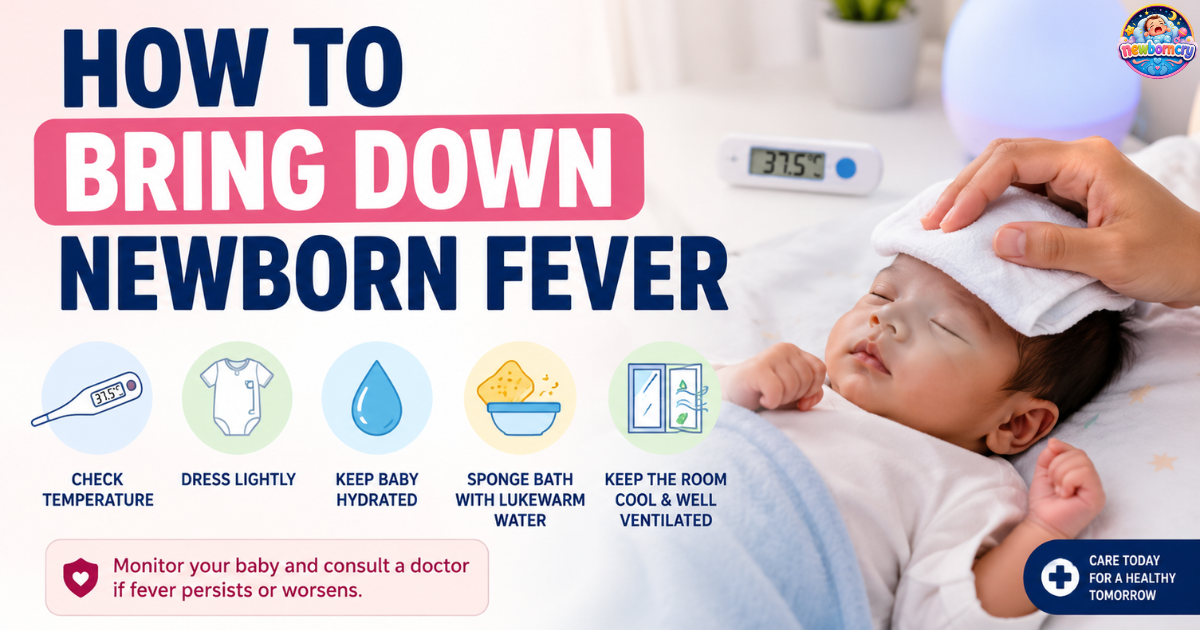
1. Prioritize Hydration
Fever can lead to fluid loss, so offer frequent breast milk or formula feeds. Even small amounts help. Watch for at least six wet diapers in 24 hours as a sign of good hydration.
2. Dress Lightly and Adjust the Room
Remove extra layers and dress your baby in just a lightweight onesie or diaper. Keep the room comfortably cool — around 68–72°F (20–22°C) — with good airflow but no direct drafts. A light cotton blanket is fine if they seem chilled.
3. Try a Lukewarm Sponge Bath
A lukewarm (not cold) sponge bath can feel soothing. Use plain water around body temperature and gently pat dry afterward. Stop if your baby starts shivering. This simple step often brings quick relief and is one of the safest home options according to today’s best practices.
4. Offer Extra Cuddles and Rest
Skin-to-skin contact can help regulate temperature gently while providing comfort. Let your newborn rest as much as they need — sleep helps healing.
These supportive measures align with recommendations from the Mayo Clinic and pediatric experts for making babies feel better while the fever runs its course under medical supervision.
What About Fever-Reducing Medication?
For newborns, medication is not the first step — and often not recommended at all without a doctor’s okay.
Current guidelines advise against giving acetaminophen (or any fever reducer) to babies under three months until they’ve been examined by a healthcare provider. The same goes for ibuprofen, which is generally not suitable before six months. Never use aspirin in babies or young children.
If your doctor approves a dose after evaluation, follow their exact instructions on amount and timing. Always use the syringe or dropper that comes with infant formulations for precise dosing.
Common Myths to Avoid When Learning How to Bring Down Newborn Fever
Parents often hear conflicting advice, but sticking to evidence-based tips prevents mistakes:
- Cold baths or ice packs — These can cause shivering, which actually raises body temperature.
- Alcohol rubs — Outdated and potentially harmful.
- Over-bundling — It traps heat and makes things worse.
- Waking a sleeping baby for medicine — Rest is more important unless your doctor says otherwise.
Focus instead on the gentle, proven comfort steps above.
Additional Tips for New Parents
Track everything: note the time, temperature, and any symptoms. This information helps doctors make fast, accurate decisions.
Keep a calm routine. Stress can affect feeding and bonding, so take turns with your partner or ask for family support.
Consider preventive habits like regular handwashing, limiting visitors during the first months, and staying up to date with well-baby checkups.
For more on daily newborn care, explore our complete newborn care guide.
Key Takeaways
- Any fever in a newborn under three months needs prompt medical evaluation — don’t wait.
- Accurate rectal temperature checks are essential for reliable readings.
- Supportive care focuses on hydration, light clothing, and lukewarm comfort measures.
- Medication should only follow professional advice.
- Trust today’s best practices and your healthcare team for the safest results.
Learning how to bring down newborn fever is about balancing calm action with expert guidance. You’re doing an amazing job caring for your baby — these small steps can make a big difference.
If your little one shows any signs of fever, reach out to your pediatrician right away. Early care gives the best outcomes.
Have questions about your baby’s symptoms? Our team is here to help with practical, parent-friendly resources every step of the way.
Stay safe and trust your instincts — you’ve got this!
FAQ
1. What temperature is considered a fever in a newborn?
A rectal reading of 100.4°F (38°C) or higher is generally defined as a fever. Always confirm with a healthcare professional for your baby’s specific situation.
2. Can I use over-the-counter medicine right away to bring down newborn fever?
No. Current guidelines recommend seeing a doctor first for any baby under three months before giving any fever-reducing medication.
3. Is a lukewarm bath safe for helping lower my newborn’s fever?
Yes, when done gently with water close to body temperature. It’s a comforting supportive measure while awaiting medical advice.
4. How do I know if my newborn’s fever is serious?
Any fever in the first three months, especially with changes in behavior, feeding, or alertness, should be checked immediately by a pediatrician. Better safe than sorry!
Disclaimer
This article is for informational and educational purposes only. It is not intended to be a substitute for professional medical advice, diagnosis, or treatment.
Always consult your pediatrician or a qualified healthcare provider immediately if your newborn has a fever or shows any signs of illness. Newborns can develop serious conditions very quickly, and only a medical professional can provide the right guidance for your baby’s specific situation.
Never give any medication to a newborn without explicit instructions from a doctor.
We strongly recommend seeking immediate medical care for any fever in babies under 3 months old.