
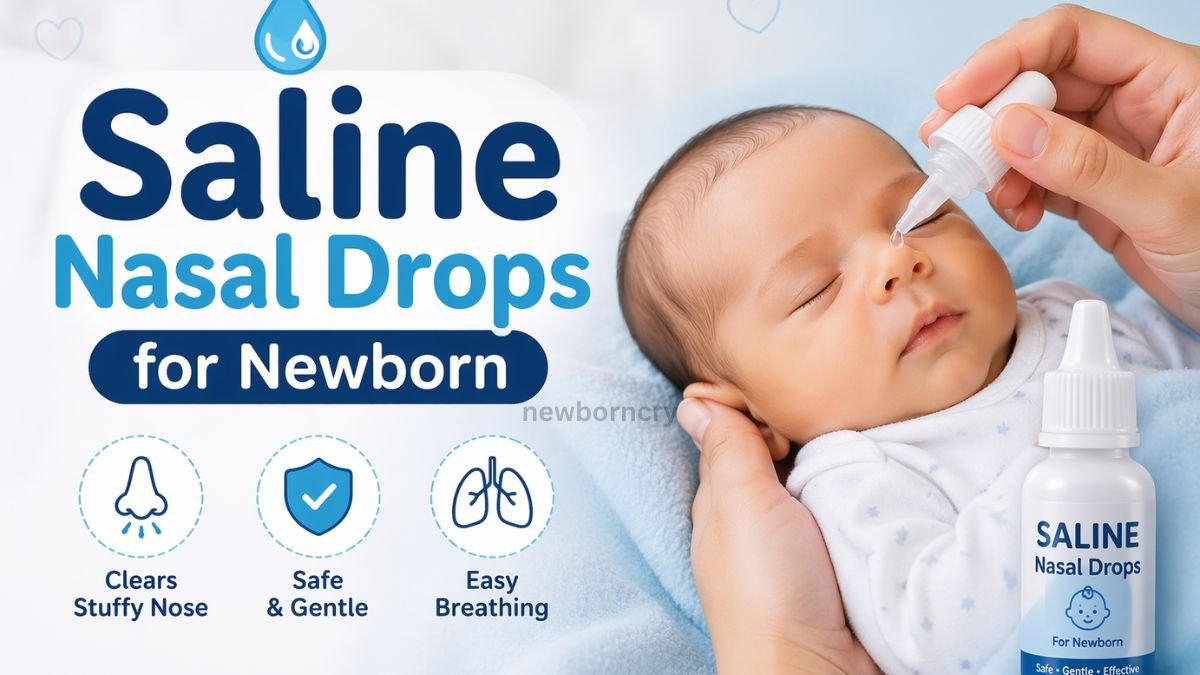
Is your little one sounding congested, struggling to feed, or waking up fussy because of a stuffy nose?
Newborns can’t blow their noses, and even a little mucus can make breathing, eating, and sleeping tough. That’s where saline nasal drops for newborn come in — a simple, drug-free solution that parents and pediatricians trust for gentle relief.
These easy-to-use drops help loosen thick mucus, moisturize dry nasal passages, and make it easier to clear your baby’s nose safely. In this guide, you’ll learn exactly how saline nasal drops for newborn work, when to use them, step-by-step instructions, and the best ways to combine them with other newborn care routines.
Why Newborns Get Stuffy Noses So Often
Newborn nasal passages are tiny. Even normal newborn mucus, dried crusts, or a mild cold can block airflow quickly.
Common triggers include:
- Dry indoor air
- Dust or allergens
- Colds or upper respiratory irritation
- Reflux that causes extra mucus
The good news? You don’t need strong medicines. Modern pediatric standards recommend starting with saline nasal drops for newborn because they are 100% safe and highly effective.
What Are Saline Nasal Drops?
Saline nasal drops are simply a sterile saltwater solution (0.9% sodium chloride). They contain no medication, no preservatives that could irritate, and no risk of rebound congestion.
They work in two ways:
- Loosen mucus so it becomes easier to remove
- Moisten the nasal lining to prevent crusting and irritation
According to the latest research and guidelines from trusted sources like the American Academy of Pediatrics and Mayo Clinic, saline drops are one of the safest first-line options for infant nasal congestion.
Key Benefits of Saline Nasal Drops for Newborn
Parents notice quick improvements when using saline nasal drops for newborn regularly. Here’s what they help with:
- Easier breathing during feeds and sleep
- Better feeding because the baby can breathe through the nose
- Less fussiness and better nighttime rest
- Reduced chance of mucus building up into a bigger issue
- Safe to use alongside other natural care methods
Many families pair saline drops with a gentle aspirator for the best results.
For more expert-backed tips on managing your baby’s cold and congestion, you can refer to the HealthyChildren.org guide on nasal suctioning and saline drops.
How to Use Saline Nasal Drops for Newborn – Step-by-Step
Using saline nasal drops for newborn is simple, but proper technique makes all the difference.
- Wash your hands thoroughly.
- Lay your baby on their back on a safe, flat surface (or hold them in your lap with head slightly tilted back).
- Put 2–3 drops of saline solution into one nostril.
- Wait 30–60 seconds — this lets the saline loosen the mucus.
- Gently suction with a clean bulb syringe or nasal aspirator.
- Repeat on the other nostril.
Pro tips:
- Do this before feeding or bedtime for best results.
- You can use saline nasal drops for newborn up to 2–3 times a day (or as your pediatrician advises).
- Always use sterile, pharmacy-grade saline — never homemade solutions for newborns.
Best Saline Nasal Drops and Tools for Newborns

Here are some parent-favorite, doctor-recommended options that work beautifully:
- Little Remedies Sterile Baby Saline Nasal Spray and Drops — gentle mist or drops perfect for tiny noses. Get Little Remedies Saline here
- Mommy’s Bliss Saline Drops — preservative-free and easy to use. Shop Mommy’s Bliss Saline Drops
- Boogie Saline Nasal Spray Mist for Baby and Kids — fine mist that many parents love for quick relief. Try Boogie Saline Spray
For even better results, combine drops with an aspirator:
- Frida Baby NoseFrida SnotSucker for Baby — the hygienic, parent-powered suction tool that gently clears what the drops loosen. Get Frida Baby NoseFrida
These products are designed specifically for newborns and follow modern safety standards.
When to Combine Saline Drops with Other Newborn Care
Saline nasal drops work even better when part of a complete routine. For example, check your baby’s bath water temperature with a reliable bath thermometer to keep bath time comfortable and safe: Best Bath Thermometer for Newborn
If your baby also has a fever or seems uncomfortable, always follow proper infant Tylenol dosage guidelines and check with your pediatrician: Infant Tylenol Dosage Guide
Safety Tips and Common Mistakes to Avoid
- Never use medicated decongestant drops on newborns.
- Clean the dropper or aspirator after every use.
- Stop and call your doctor if congestion lasts more than a few days, or if your baby has trouble breathing, fever, or poor feeding.
- Saline drops have almost no side effects — the biggest “risk” is simply using too little!
Key Takeaways
Saline nasal drops for newborn are a parent’s best friend when it comes to stuffy noses. They’re safe, effective, drug-free, and recommended by leading pediatric experts.
With the right technique and a couple of trusted products, you can help your baby breathe easier, feed better, and sleep more peacefully — all within minutes.
FAQ – Saline Nasal Drops for Newborn
Q1: Are saline nasal drops safe for newborns?
Yes! They are completely safe and contain only sterile saltwater. Pediatricians recommend them as the first choice for congestion in babies.
Q2: How often can I use saline nasal drops for my newborn?
Usually 2–3 times a day is enough. Always follow the instructions on the bottle or your doctor’s advice.
Q3: Do I need to suction after every drop?
It’s highly recommended. The drops loosen the mucus — suction removes it so your baby can breathe clearly.
Q4: Can I make my own saline solution at home?
For newborns, it’s safest to buy sterile, ready-to-use saline drops from the pharmacy to avoid any risk of contamination.
Your baby deserves comfortable breathing — and you deserve peace of mind. Try saline nasal drops for newborn today and see the difference in just one or two uses.
Have questions about your baby’s congestion? Drop them in the comments below — I’m here to help!
Always consult your pediatrician for personalized advice.
1 thought on “Saline Nasal Drops for Newborn”