
A sudden, loud cry comes through the baby monitor just as you’ve finally fallen into a deep sleep. You run to the cot, your heart racing, only to find your baby sound asleep with their eyes closed.
You’re not the only one who has heard this before. One of the most confusing parts of early parenthood is witnessing a crying in sleep newborn. It doesn’t seem right. Shouldn’t they be awake if they’re crying? Why are they crying if they’re sleeping?
The good news is that this behaviour is usually a normal part of how babies grow and change. This guide will help you understand why your baby is making noise at night and how you can help them (and yourself) get more sleep based on the latest research on sleep in children.
Understanding the “Active Sleep” Phase
Before diving into the causes, it is essential to understand how baby sleep differs from adult sleep. Adults spend most of their night in a quiet, deep sleep state. Newborns, however, spend about 50% of their sleep time in REM (Rapid Eye Movement), also known as “active sleep.”

During active sleep, a baby’s brain is incredibly busy. You might see them grimace, twitch their limbs, breathe irregularly, or even let out a brief cry or whimper. According to the Mayo Clinic, these movements and sounds are part of a developing nervous system and do not necessarily mean the baby is awake or distressed.
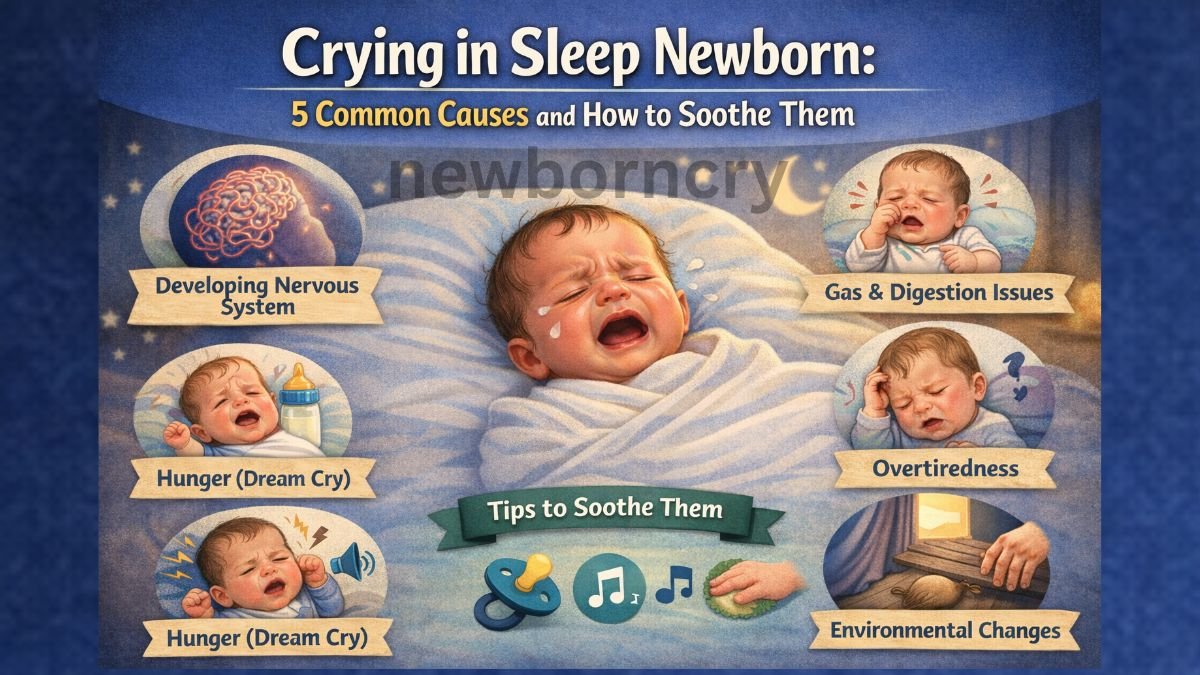
5 Common Causes for a Crying in Sleep Newborn
While active sleep is the most common reason, several other factors can trigger vocalizations during the night.
1. Developing Nervous System and Brain Growth
The brain of a newborn is growing very quickly. They process everything they see, hear, and feel during the day at night. Sometimes, when they switch between sleep cycles, this “overload” of new information makes them whimper or cry. Even when they are asleep, their bodies are basically practicing how to respond to things.
2. Digestive Discomfort and Gas
Newborns Babies’ digestive systems are still very young. When a baby has gas bubbles or feels like they need to go to the toilet, they may grunt or cry out in their sleep. The baby may also pull their legs up to their tummy or turn their face red at the same time.
3. Hunger Cues and the “Dream Cry”
Sometimes, a baby starts to cry in their sleep as a precursor to waking up for a feeding. This is often referred to as a “dream cry.” If you catch it early, you might notice they are also rooting or sucking on their hands while still appearing to be asleep.
4. Overtiredness
It sounds like a paradox, but an overtired baby often has a harder time staying in a peaceful sleep. If a newborn misses their “sleep window,” their body produces cortisol and adrenaline, making their transitions between sleep cycles much rockier and more vocal.
5. Environmental Transitions
Subtle changes in the room—a sudden drop in temperature, a floorboard creaking, or even the cessation of a white noise machine—can cause a baby to startle and cry out without fully opening their eyes.
How to Soothe Your Baby Without Waking Them
The biggest mistake many new parents make is rushing to pick the baby up the moment they hear a peep. If the baby is actually in active sleep, picking them up will wake them up fully, making it harder for them to get back to sleep.
Use the “Wait and See” Method
When you hear your crying in sleep newborn, wait for 30 to 60 seconds before reacting. Watch their eyes. If their eyes remain closed, they are likely still asleep. In many cases, they will settle back into a quiet sleep phase on their own.
The Power of Gentle Touch
If the crying persists but they are still asleep, try “low-intervention” soothing:
- Place a firm, warm hand on their chest or tummy.
- Gently whisper “shhh” or hum a low tone.
- Avoid turning on bright lights or making eye contact, which signals “playtime” or “interaction time” to a baby’s brain.
Decode the Sound
Not all cries are created equal. Understanding the specific phonetic sounds of a baby’s cry can help you decide if they need a diaper change, a burp, or a feeding. For a deeper dive into this, check out this guide on Dunstan Baby Language and newborn cries.
Safety and Best Practices for Newborn Sleep
Following modern safety standards is the best way to ensure your baby (and you) can sleep soundly. The American Academy of Pediatrics (AAP) emphasizes the “ABC” of safe sleep:
- Alone: The baby should sleep in their own crib or bassinet.
- Back: Always place your baby on their back to sleep.
- Crib: Use a firm, flat sleep surface with no loose blankets, pillows, or toys.
Use White Noise
A consistent, low-frequency white noise machine can work wonders. It mimics the rhythmic whooshing sounds of the womb, which helps drown out household noises and provides a “sound blanket” that makes sleep transitions smoother.
Key Takeaways
- Active Sleep is Normal: Half of a newborn’s sleep is “active,” involving movements and noises.
- Wait Before Acting: If their eyes are closed, give them a minute to self-soothe.
- Check the Environment: Ensure the room is cool (68–72°F or 20–22°C) and dark.
- Health Check: While crying in sleep is usually normal, always trust your gut. If the crying sounds like intense pain or is accompanied by a fever, consult your pediatrician.
Frequently Asked Questions (FAQ)
Why do newborns suddenly cry in their sleep?
Most often, this is due to the “Active Sleep” phase (REM sleep). Because their nervous systems are still maturing, they can twitch, grunt, and cry out without actually being awake. It can also be a reaction to gas or a transition between sleep cycles.
What are the 7 danger signs in a newborn baby?
According to latest research and medical standards, you should seek immediate medical attention if your newborn shows:
- Fever (100.4°F / 38°C or higher).
- Difficulty breathing or flared nostrils.
- Dehydration (fewer than 6 wet diapers a day).
- Jaundice (yellowing of the skin/eyes).
- Lethargy or difficulty waking up.
- Persistent vomiting (not just spit-up).
- Unusual or inconsolable high-pitched crying.
What is the 5 3 3 rule for crying?
The 5-3-3 rule is often used in sleep training for older infants (not newborns), referring to the hours between night feedings. For newborns, however, we focus on the “Pause.” If a baby cries in their sleep, wait a few minutes to see if they settle before intervening. Always follow your pediatrician’s advice on feeding intervals for newborns.
What does a colic cry sound like?
A colic cry is usually distinct from regular fussiness. It is often a high-pitched, intense screaming sound that lasts for more than three hours a day, three days a week. The baby may clench their fists, arch their back, and seem impossible to soothe despite all efforts.
Summary: Seeing a crying in sleep newborn can be startling, but it is usually a sign of a healthy, developing brain. By practicing the “pause” and ensuring a safe sleep environment, you can help your baby navigate these active sleep phases and move toward more peaceful nights.
2 thoughts on “Crying in Sleep Newborn: 5 Common Causes and How to Soothe Them”