
Quick answer first, so you don’t have to scroll:
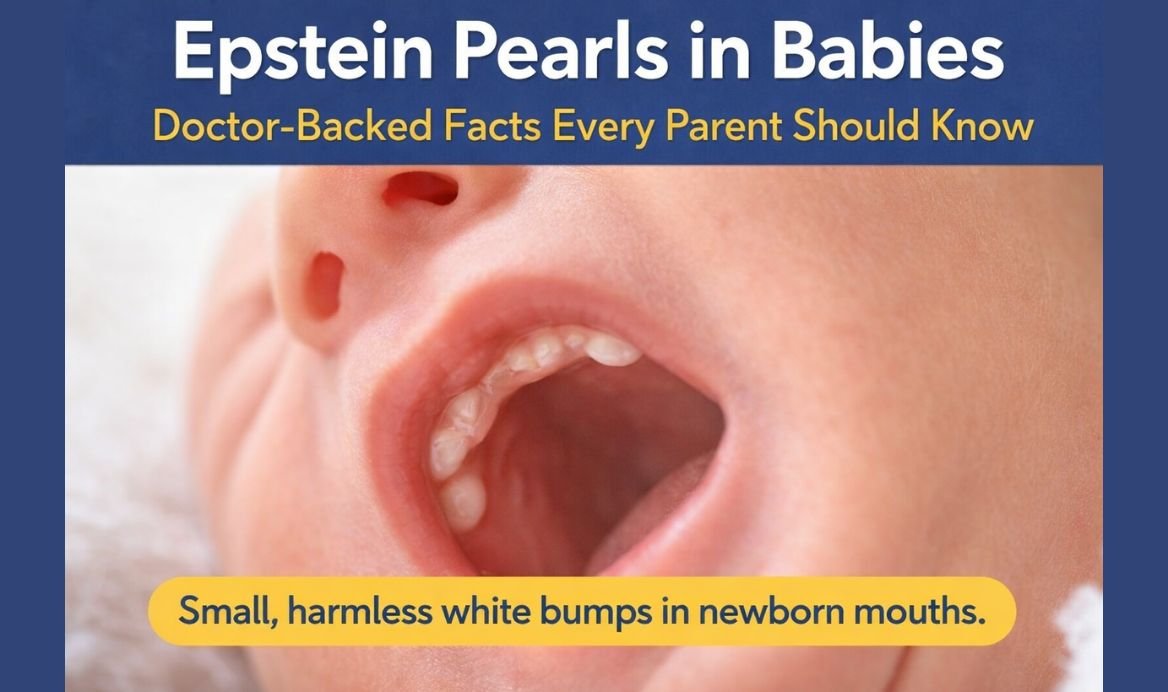
Epstein pearls are harmless white or yellow bumps that commonly appear inside a newborn’s mouth. Pediatricians consider them normal, painless, and temporary, and they go away on their own without any treatment.
If you just noticed small white spots on your baby’s gums or the roof of their mouth, it can feel alarming. Many parents in the U.S. search this exact concern during the first few days after bringing their baby home. The reassuring truth is that Epstein pearls are one of the most common and least concerning newborn findings.
Why You Can Trust This Information (Doctor-Backed Context)
This article is based on standard pediatric guidance used by U.S. pediatricians and aligns with recommendations from leading medical institutions such as the American Academy of Pediatrics, Mayo Clinic, Cleveland Clinic, and MedlinePlus.
These organizations consistently describe Epstein pearls as a benign newborn condition that does not require medical treatment.
What Are Epstein Pearls?
Epstein pearls are tiny cysts filled with keratin, a natural protein found in skin, hair, and nails. They usually appear:
- On the roof of the mouth (hard palate)
- Along the upper gums
- Near the center line of the palate
They often look like small grains of rice or milk residue, which is why many parents mistake them for teeth or an infection.
How Common Are Epstein Pearls in Newborns?
They are extremely common.
Medical studies show that up to 80 percent of newborns develop Epstein pearls either at birth or within the first few days of life. They occur in:
- Breastfed babies
- Formula-fed babies
- Full-term, healthy newborns
Their presence does not indicate illness or abnormal development.
Why Do Epstein Pearls Happen?
Epstein pearls form during normal fetal development.
As the baby’s mouth and palate develop in the womb, some epithelial cells become trapped. After birth, these cells fill with keratin and appear as small white or yellow bumps.
They are:
- Not caused by poor hygiene
- Not related to feeding style
- Not a sign of allergy or infection
Do Epstein Pearls Hurt My Baby?
No.
Pediatricians agree that Epstein pearls:
- Do not cause pain
- Do not interfere with feeding
- Do not affect breathing
- Do not cause fever or discomfort
Most babies with Epstein pearls behave completely normally.
How Long Do Epstein Pearls Last?
In most cases, Epstein pearls disappear within 1 to 3 weeks.
As saliva production increases and the baby feeds, the cysts naturally break down and resolve on their own. Many parents notice they are gone before the first or second pediatrician visit.
Do Epstein Pearls Need Treatment?
No treatment is needed.
Pediatric guidance clearly advises parents not to intervene. Do not:
- Try to wipe them off
- Scrape or press them
- Use oral gels or home remedies
Manipulating the area can irritate your baby’s delicate mouth tissue and increase the risk of infection.
What Do Pediatricians Say About Epstein Pearls?
U.S. pediatricians classify Epstein pearls as a benign neonatal oral finding.
According to pediatric practice guidance:
- Epstein pearls are harmless
- They resolve spontaneously
- Medications, oral cleaning, or medical procedures are not recommended
Reassurance and observation are considered the only necessary management.
Epstein Pearls vs Oral Thrush: A Common Confusion

Many parents confuse Epstein pearls with oral thrush, but they are different conditions.
Epstein pearls:
- Appear as smooth, firm white or yellow bumps
- Stay in one place
- Do not spread
- Do not bother the baby
Oral thrush:
- Appears as patchy white areas
- Can spread to cheeks and tongue
- May cause feeding discomfort
- Often requires medical treatment
If white patches spread or your baby seems uncomfortable while feeding, a pediatrician should evaluate them.
When Should You Call a Pediatrician?
Although Epstein pearls are harmless, pediatricians recommend medical evaluation if you notice:
- White patches spreading beyond the gums or palate
- Redness, bleeding, or swelling
- Difficulty feeding
- Fever or signs of illness
- White bumps lasting longer than one month
These signs may indicate a different condition that needs attention.
Key Takeaway for Parents
Seeing white bumps in your newborn’s mouth can be scary, but Epstein pearls are:
- Normal
- Common
- Painless
- Temporary
They are part of normal newborn development and do not affect your baby’s health.
As you focus on your newborn’s health, safe sleep is just as important. Parents who choose to bed-share may benefit from learning about Safe Sleep 7 and the safety guidelines behind it.
Frequently Asked Questions
Can Epstein pearls come back after they disappear?
No. Once they resolve, they do not return.
Are Epstein pearls related to teething?
No. They are not teeth and have no connection to teething.
Can breastfeeding cause Epstein pearls?
No. Feeding method does not cause them.
Do Epstein pearls mean my baby has an allergy or infection?
No. They are not linked to allergies or infections.
Medical Sources and Pediatric Guidance
The information in this article aligns with pediatric guidance from trusted U.S. medical organizations, including the American Academy of Pediatrics, Mayo Clinic, Cleveland Clinic, and MedlinePlus. These institutions recognize Epstein pearls as a normal and temporary newborn condition that does not require treatment.
Medical Disclaimer
This content is for educational purposes only and reflects widely accepted pediatric medical guidance. It does not replace personalized medical advice from a licensed pediatrician.