
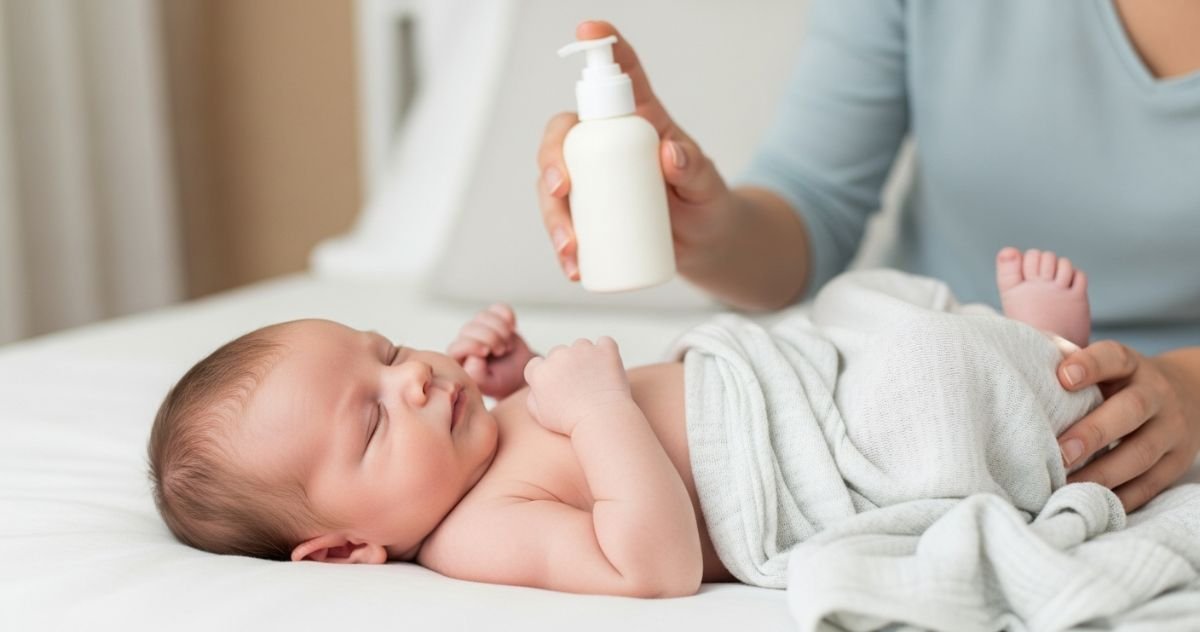
Skin that is new is smooth and soft, but it is also very fragile. When Can You Put Lotion on a Newborn? This is a question that a lot of parents have. Most babies don’t need lotion right away, that’s the short answer. In fact, lotion that is used too soon can sometimes hurt more than help.
To protect your baby’s skin and keep it from getting irritated, you should know the right time, why lotion may be needed, and how to pick a safe product.
Quick Answer for Parents
After the first 24 to 48 hours, you can typically apply lotion to a newborn, but only if their skin appears dry, peeling, or irritated. In general, pediatricians advise against using a fragrance-free, hypoallergenic baby lotion until after the first bath. This approach follows newborn skin-care guidance that emphasizes gentle cleansing, minimal product use, and protecting the skin’s natural barrier in the early days, as outlined by the American Academy of Pediatrics.
Newborn Skin in the First 24 to 72 Hours

During the first few days of life, a baby’s skin is adjusting to the outside world. At birth, newborns are covered with a white, creamy substance called vernix. This natural layer protects the skin and helps keep it moisturized.
In most cases, newborn skin does not need lotion during this period because:
- The skin has its own natural oils
- The protective barrier is still developing
- Too many products can clog pores or cause irritation
For this reason, many doctors suggest avoiding lotion completely during the first day or two unless there is a medical reason.
After the First Bath: When Lotion May Be Helpful
Once your baby has had their first bath and the vernix has washed away, you may notice mild dryness or peeling. This is normal and usually does not require treatment.
However, lotion may be helpful if:
- The skin looks cracked or very dry
- Your baby has dry patches on arms or legs
- You live in a very dry or cold climate
- A pediatrician recommends moisturizing
This is typically when parents start asking when can you put lotion on a newborn safely. For many babies, this is around 2 to 3 days after birth, but timing can vary.
When You Should Not Use Lotion on a Newborn
Even after the first few days, lotion should not be used routinely. Avoid using lotion if:
- The skin looks healthy and soft
- There is redness, rash, or broken skin
- The umbilical cord stump has signs of infection
- The product contains fragrance or harsh chemicals
Applying lotion unnecessarily can increase the risk of clogged pores or skin reactions.
Choosing a Safe Lotion for Newborn Skin
Not all baby lotions are safe for newborns. Newborn skin absorbs ingredients more easily than adult skin, which makes product choice very important.
A safe newborn lotion should be:
- Fragrance-free
- Hypoallergenic
- Designed specifically for babies
- Free from parabens, dyes, and alcohol
Many pediatricians recommend simple formulas with minimal ingredients. Brands such as Aveeno Baby, Cetaphil Baby, and Eucerin Baby are commonly suggested because they are gentle and widely tested.
According to guidance aligned with pediatric skin-care recommendations from the American Academy of Pediatrics, newborn skin care should focus on simplicity and avoiding unnecessary products during the early weeks.
Ingredients You Should Avoid in Baby Lotions
Always check the ingredient list before applying any lotion to your newborn. Avoid products that contain:
- Fragrance or perfume
- Essential oils
- Parabens
- Phthalates
- Artificial colors
- Menthol or camphor
Even natural ingredients can cause reactions in newborns, so “organic” does not always mean safe.
How to Apply Lotion Safely to a Newborn
If you decide to use lotion, proper application matters.
Follow these steps:
- Wait until the skin is fully dry after a bath
- Use a very small amount
- Apply gently using clean hands
- Focus only on dry areas, not the entire body
- Avoid the face unless advised by a doctor
Using lotion once a day or even less is usually enough. More frequent use is rarely needed.
Can You Put Lotion on a Newborn’s Face?

In most cases, lotion should not be applied to a newborn’s face. Facial skin is even more sensitive and is prone to irritation.
If the face appears dry or flaky, consult your pediatrician before applying any product. Often, gentle cleansing with water is all that is needed.
Climate Matters More Than Parents Realize
Climate plays a big role in newborn skin dryness.
- In dry or cold climates, skin may lose moisture faster
- In humid climates, lotion is often unnecessary and may feel heavy on the skin
Parents living in dry areas may need lotion earlier, while those in humid regions may not need it at all.
When to Talk to a Pediatrician
Always contact your pediatrician if:
- Dry skin does not improve
- You notice redness, oozing, or cracking
- Your baby develops a rash after using lotion
- You suspect eczema or another skin condition
Medical guidance is especially important for babies with sensitive or allergy-prone skin.
For a deeper understanding of newborn skin care routines, including how bathing frequency affects dryness and the need for lotion, read our complete guide: How Often Should You Bathe a Newborn? AAP & WHO Complete Guide for New Parents.
Frequently Asked Questions
Can I use lotion on a 1-day-old baby?
Most doctors recommend waiting at least 24 to 48 hours unless dryness is severe and advised by a pediatrician.
Is lotion safe after the umbilical cord falls off?
Yes, lotion can be used after the cord falls off if the skin is dry and healthy.
How often should I moisturize my newborn?
Only when needed. Many newborns do not need daily moisturizing.
What is the safest lotion for newborn dry skin?
Fragrance-free, hypoallergenic lotions made specifically for babies are the safest choice.
Final Thoughts
So, when can you put lotion on a newborn? For most babies, the answer is after the first few days of life, and only if the skin truly needs it. Newborn skin is naturally designed to protect itself, which is why simple care is often the best approach.
When in doubt, less is more. And if you are unsure about when can you put lotion on a newborn, always consult your pediatrician for personalized advice.
Disclaimer:
This article is meant to give new parents general information. It should not be used instead of medical advice from your child’s doctor. Because every baby’s skin is different, you should always talk to your pediatrician before starting or changing any skin care routine for your baby.