
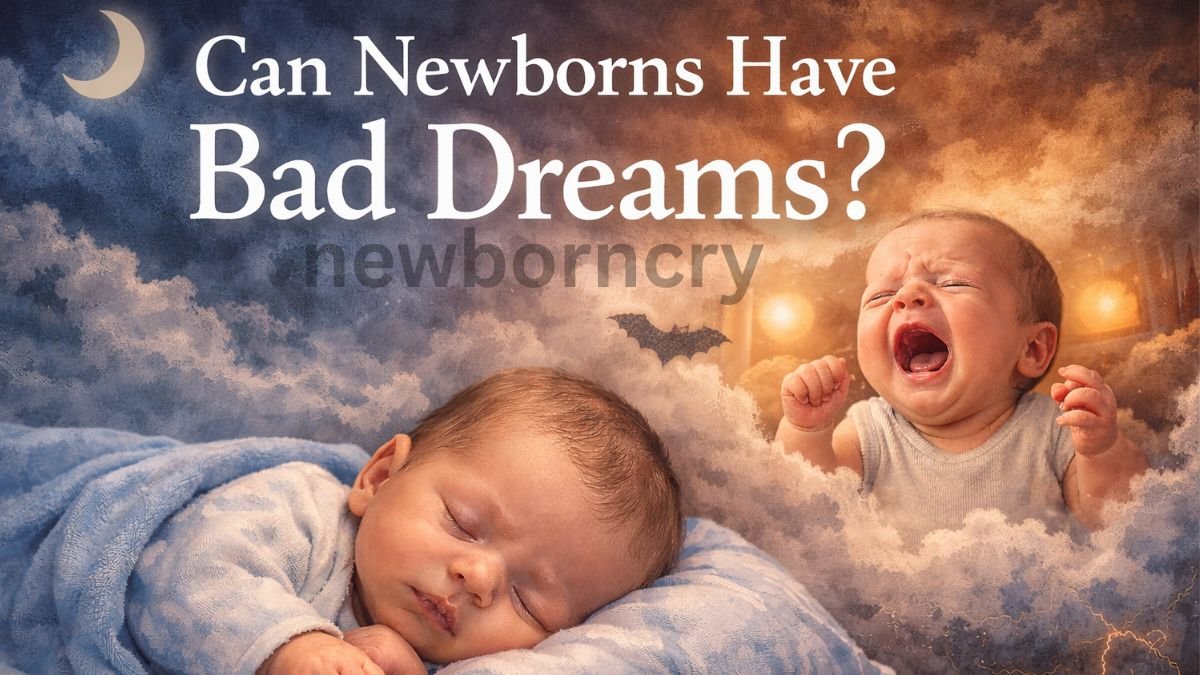
Have you ever watched your newborn fall asleep and noticed their eyelids flutter, a sudden twitch, or even a brief cry? These brief, heartbreaking episodes may raise concerns that your child is trapped in a bad dream. Many parents are left wondering — can newborns have bad dreams, or is something else causing the nighttime noises and movements?
The truth is that newborn sleep is complex, and much of what we see—fidgeting, vocalizing, and even crying—does not always indicate that they are having a nightmare.
This article will explain what science has to say about infant sleep, how newborn dream patterns differ from older children and adults, and what typical newborn behavior looks like at night. Let’s dive in!
Understanding Newborn Sleep Patterns

Short cycles with frequent REM
Newborns sleep a lot, but they do so in short bursts—often two to four hours at a time—around the clock. Unlike adults, who usually consolidate their sleep at night, newborns’ circadian rhythms are not fully developed, so they sleep in multiple cycles throughout the day and night.
A large part of newborn sleep is spent in REM (rapid eye movement) sleep. In adults, the REM stage is most closely associated with dreaming. However, in infant sleep, REM appears to play a slightly different role, primarily focusing on brain development. Their small brains are rapidly connecting, processing new experiences, and consolidating knowledge from their waking hours.
REM for Brain Development
Why do babies spend so much more time in REM than adults? The answer lies in neurological development. During REM, the brain is extremely active, which may be critical for laying the groundwork for cognitive and emotional development. Research published by the National Institutes of Health (NIH) confirms that REM sleep in infancy plays a critical role in building and pruning neural connections in the developing brain.
Although most adults associate REM with dreaming, it is thought that in newborns, it is more about brain structure development and basic sensory information processing.
Furthermore, frequent nighttime waking is considered normal in young infants and may even be protective against risks such as SIDS. If your baby wakes up multiple times during the night, don’t worry; this is normal for healthy newborn sleep development.
Do Newborns Really Dream?
Dreams versus Sensory Impressions
When parents ask, “Do babies dream?” The answer depends on how we define “dreaming.” Dreams necessitate a certain amount of imagination, memory, and the ability to construct narrative structures while sleeping. However, newborns are still developing the cognitive framework for storytelling in their minds.
Yes, they may have fleeting impressions, and neurons may fire spontaneously—this is a normal part of brain activity. However, current research suggests that newborns do not have dreams in the same way that older children or adults do. These small bursts of brain activity in REM may feel more like sensory snapshots or fleeting sensations than coherent dreams or storylines. Imagine your baby’s brain running trial programs, making connections, and preparing for future milestones.
The Building Blocks of Imagery
By the age of two or three, children have developed more advanced imaginative capacity, memory retention, and emotional complexity. This is when they begin to report dreams and, in some cases, nightmares. Until that point, newborns’ nighttime “dreams” resemble the brain’s test runs, with no organized, story-like content.
Can Newborns Have Bad Dreams or Nightmares?

Fear and imagination
If someone asks, “Can newborns have bad dreams?” keep in mind that bad dreams (or nightmares) require fear, imagination, and certain memory structures to occur simultaneously. Infants lack these components due to incomplete emotional and cognitive development. Sleep experts from the Cleveland Clinic explain that true nightmares require a level of imagination and emotional development that infants simply haven’t reached yet. This is why genuine newborn nightmares—as we understand them as terrifying experiences—are extremely unlikely.
Why They Seem Distressed
The heartbreaking moments when a baby fusses or briefly cries in sleep frequently have simpler explanations:
- Gas or digestive discomfort – Gas bubbles or digestive pains in newborns can cause fussing. You may hear them groan or whimper in response.
- Moro Reflex (Starting Reflex) – Many babies startle awake with outstretched arms and a small gasp or cry. The Moro reflex is a normal, protective reflex that may appear alarming, but it is simply part of their neurological development.
- Hunger – Babies have small stomachs and become hungry quickly. Waking up crying (or stirring in their sleep) can simply be a baby’s way of saying, “Time to eat!”
- Temperature or discomfort – If they’re feeling too hot, too cold, or overstimulated from the day’s activities, they may fuss at night.
- Temporary Overstimulation – A day filled with new sights, sounds, and faces can result in a restless baby who appears to be fussing in their sleep.
In short, newborns lack the emotional maturity and cognitive development required to conjure up fearful images. They also lack the life experiences and conceptual understanding that underpin older children’s nightmares.
Why do babies cry, smile, or move in their sleep?
Newborns’ sleeping patterns frequently include spontaneous smiles, flailing arms, coos, and even cries. While these expressions may tug at your heartstrings, they are usually part of normal reflexes and infant development.
Reflexes at play
- Smiling – Babies occasionally display a fleeting “sleep smile,” which is more of a reflex than a reaction to pleasant thoughts. Known as “endogenous smiling,” it frequently occurs during the lighter stages of sleep.
- Crying – Short bursts of crying in sleep can be caused by discomfort, a sudden Moro reflex, or a random jolt of brain activity.
- Twitching and Moving – Small tics and twitches are common during REM sleep and aid in the strengthening of neuromuscular connections. A 2022 comprehensive review in the National Library of Medicine highlights how the twitches we see during a baby’s REM sleep are actually helping to build their sensorimotor system.
Indicators of Normal Neurological Growth
The occasional grimace, whimper, or giggle while sleeping indicates that your baby’s nervous system is working hard. The trusted resource HealthyChildren.org, run by the American Academy of Pediatrics (AAP), describes “active sleep” as a stage where babies may twitch, jerk, or even cry out without waking up. In other words, the reason babies cry while sleeping is usually not due to fear or “bad dreams,” but to bodily or environmental triggers.
When to Worry?
Most of the time, newborn night noises are nothing to worry about. However, if you notice frequent or intense, inconsolable crying while sleeping, you should look into an underlying cause. Possible medical or developmental issues may be in play if:
- Your baby appears to be in pain or distress for an extended period of time.
- Their sleep pattern has changed significantly, and there is no explanation for it.
- Crying occurs in conjunction with other symptoms such as fever, vomiting, or poor feeding.
In such cases, consult your pediatrician. They can rule out reflux, allergies, and other medical issues that may interfere with your baby’s sleep.
Tips for Peaceful Sleep
While you can’t promise a completely fuss-free night (remember, wake-ups are normal), you can create an environment that soothes your baby and promotes more stable sleep cycles. Here are some practical sleep tips to help:
Swaddling
A comfortable, snug swaddle reduces the startle reflex and makes your baby feel secure, similar to the womb environment.
White noise
Gentle white noise or a sound machine can simulate the calm hush of the womb and help drown out household noises that may startle a baby. To help mask startling sounds and create a calming “sound blanket,” a portable white noise machine is a game-changer. The Shusher Firefly Sound Machine and Night Light is a great, parent-friendly option to add to your bedtime routine.
Bedtime Routine
Even for newborns, a consistent routine can help lay the groundwork for long-term sleep consolidation. Consider a short routine that includes dim lighting, a cozy feeding, a lullaby, or light rocking.
Gentle rocking or holding
Skin-to-skin contact and gentle motion are especially beneficial to newborns. Rocking or holding your baby before putting them down can often help ease the transition to sleep.
Check the room temperature
Keep the nursery at a comfortable temperature (68-72°F/20-22°C). Overheating can cause discomfort, and a cold environment can cause babies to wake up frequently.
Limit overstimulation right before bedtime
Avoid loud noises, bright lights, and excessive playtime right before bedtime. Instead, opt for a quiet, dimly lit environment.
Feed on demand
In the early months, frequent night feedings are normal to meet your baby’s needs. Keeping feedings calm, quiet, and low-light can help them fall back asleep more easily.
Use a safe wearable blanket
Because loose blankets are a safety risk, using a wearable blanket is the best alternative. The American Academy of Pediatrics (AAP) strongly recommends against loose blankets and promotes the use of a wearable sleep sack. The Kyte Baby Sleep Bag in Silly Goose 1.0 is a parent-favorite for its buttery-soft bamboo fabric that helps regulate temperature and provides a gentle, cuddle-like weight without any suffocation hazard. And while we’re on the topic of a safe, consistent sleep environment, a quality wearable blanket—like the one we review here —can make a real difference in preventing temperature-related wake-ups.
Following these guidelines can help to promote a peaceful sleep environment and alleviate typical nighttime fussiness.
FAQs
1. Why do newborns occasionally cry in their sleep?
Babies cry during sleep for a variety of reasons, the most common of which are physical discomforts such as gas, hunger, or temperature changes. Furthermore, normal neurological reflexes can cause brief crying, which is not always caused by a frightening dream. It’s also helpful to distinguish between a sleep cry and a cry of genuine need. Our guide on understanding why newborns cry in their sleep breaks down the 5 most common causes.
2. How can I tell if my newborn is having a bad dream?
It is highly unlikely that your newborn is having a nightmare. Bad dreams necessitate fear and imagination, which typically emerge well after infancy. If your baby is crying or fussing excessively, look for other reasons, such as hunger or discomfort. If in doubt, see a pediatrician.
3. What causes nightmares in newborns?
Technically, newborns lack the cognitive and emotional maturity to have nightmares. The random movements, cries, or facial expressions you see are usually the result of reflexes or physical needs, not genuine newborn nightmares.
4. Why do newborns cry in dreams?
While it may appear that your baby is crying because of an emotional dream, newborn crying during sleep is often caused by reflexes, hunger, or other discomforts. They do not yet have the ability to visualize scary images in the same way that older children do.
Conclusion
It’s natural for parents to wonder, “Can newborns have bad dreams?” when they notice their babies crying, smiling, or twitching in their sleep. The good news is that true bad dreams or nightmares require emotional maturity and imaginative capacity that newborns simply do not have yet. The majority of nighttime fussiness is caused by normal reflexes, hunger, temperature issues, or the essential process of a growing, busy brain.
Remember that infant sleep can be unpredictable and noisy, and brief awakenings are to be expected. A calm and reassuring bedtime routine, combined with attention to basic needs, can help you and your baby sleep peacefully (if occasionally interrupted).
Before you know it, your newborn will be transitioning to more mature sleep cycles—and one day, they will tell you about their true dreams. Above all, trust your instincts, provide comfort as needed, and enjoy your baby’s first months of life. They’re growing quickly, and even their sleep is a part of this incredible developmental journey!
References & Scientific Sources
Before we wrap up, I want to be fully transparent with you. The information in this article isn’t just my opinion—it’s backed by real research from trusted medical institutions. Here are the scientific sources that support everything we’ve discussed:
- National Institutes of Health (NIH) – Research on REM sleep and early brain development in infants.
- Cleveland Clinic – Expert insights on nightmares, emotional maturity, and sleep patterns in young children.
- National Library of Medicine (2022) – Comprehensive review on infant REM sleep twitching and sensorimotor system development.
- HealthyChildren.org (American Academy of Pediatrics) – Guidelines on active sleep stages and normal newborn sleep behavior.
- American Academy of Pediatrics (AAP) – Official safe sleep recommendations, including the use of wearable blankets instead of loose bedding.
You can confidently share this article with other tired, worried parents knowing that every claim here has a real scientific backbone. No fluff, no fear—just facts
Disclaimer
The information provided in this article is for general informational and educational purposes only and is not a substitute for professional medical advice, diagnosis, or treatment. Always seek the advice of your pediatrician or other qualified health provider with any questions you may have regarding your baby’s health or sleep patterns. Never disregard professional medical advice or delay seeking it because of something you have read here. The author S.A and founder of newborncry.com are not liable for any risks or issues associated with using or acting upon the information in this article. External links to third-party products (including affiliate links) are provided for convenience and do not constitute endorsement.