
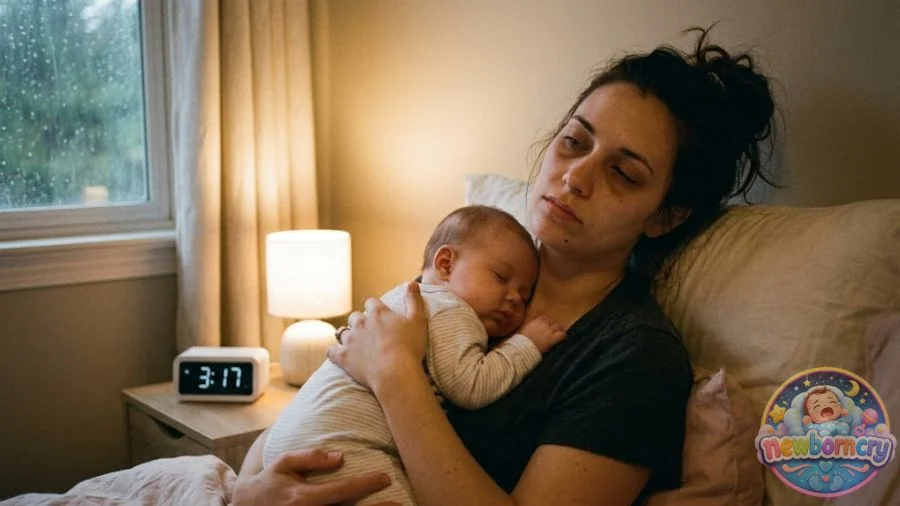
Hey there. If your baby suddenly started waking every hour or fighting naps like it’s a full-time job, you might be right in the middle of the 4 month sleep regression. This phase hits a ton of families right around the four-month mark, often when you finally thought you had a little rhythm going. Nights get long again. Naps turn short and unpredictable. And that sweet baby who was sleeping longer stretches? They’re back to needing you a whole lot more.
It feels exhausting and confusing. But this is actually a normal part of your baby’s growth, even when it doesn’t feel normal at all.
Table of Contents
What the 4 Month Sleep Regression Feels Like in Real Life
You know the drill by now. Your baby might have been sleeping pretty well, maybe even giving you a five- or six-hour stretch. Then one week everything shifts. Bedtime turns into a battle. Your little one wakes 30 to 45 minutes after you put them down. Naps that used to last an hour now end after 20 or 30 minutes.
During the day your baby seems cranky or overtired, even after sleeping. At night the crying comes in waves, and you’re left wondering if you did something wrong. A lot of parents say it feels like their baby “forgot” how to sleep. That’s not what’s happening, but it sure can feel that way when you’re running on two hours of broken sleep yourself.
Why Your Baby’s Sleep Changes Around Four Months

Around this age, your baby’s sleep patterns start maturing. According to experts at the American Academy of Pediatrics (AAP), this shift happens because infants begin transitioning from newborn sleep patterns into more adult-like sleep cycles. Newborns spend most of their time in deep sleep. Now, they begin cycling through lighter sleep stages, meaning your baby wakes up more easily between cycles.
At the same time, their brain is working overtime on big developmental leaps. Rolling, reaching, grabbing toys, and noticing when you leave the room all start clicking around now. Your baby practices these new skills during the day, but sometimes the practice spills into nighttime too. That combination of new sleep cycles and busy brain development is what kicks off the 4 month sleep regression for so many little ones.
Common Signs of the 4 Month Sleep Regression
Every baby shows it a little differently, but here are the signs parents notice most:
- More night wakings than before, even if your baby was sleeping longer stretches
- Short naps or sudden nap refusal
- Bedtime resistance or “false starts” where they wake soon after falling asleep
- Extra fussiness in the late afternoon or early evening
- Seeming overtired during the day even after sleeping
If you’re seeing two or more of these together, there’s a good chance the 4 month sleep regression is playing a part.
Practical Ways to Help Your Baby Through the 4 Month Sleep Regression
You can’t skip this phase, but you can make it smoother for both of you. Small, consistent changes often help more than big overhauls.
Create a Simple, Repeatable Bedtime Routine
Keep the same steps every single night. A short bath, dim lights, a quick story or lullaby, a full feed, then into the crib while your baby is still a little awake. The repetition helps your little one’s brain know sleep is coming next. You don’t need anything fancy. Just the same order, around the same time each evening.
Use Wake Windows to Protect Sleep
At four months most babies do best with roughly 1.5 to 2 hours of awake time between sleeps. Going much longer often leads to overtired meltdowns that make settling harder. Our free baby wake window calculator takes the guessing out of timing naps and bedtime so you can stay ahead of the overtired cycle.
Keep Night Wakings Calm and Boring
When your baby wakes at night, keep the room dark and your voice soft. Do what needs doing (diaper or feed) then settle them back down with minimal talking or play. Bright lights and conversation tell their brain it’s time to be awake. If the crying feels nonstop and you’re not sure what your baby needs, our newborn crying at night guide walks through common reasons and gentle ways to help.
Give Daytime Practice Time for New Skills
Your baby is learning so much right now. Offer plenty of floor time during the day for rolling and reaching practice. The more they work on these skills while awake and happy, the less they tend to practice them at 2 a.m.
Protect One Good Nap Each Day
Short naps are common during this phase, but try to guard at least one longer nap. A dark room, white noise, and watching wake windows closely can help. Even a 40-minute nap counts and gives everyone a much-needed reset.
What No One Really Tells You
This phase usually lasts anywhere from two to six weeks, though some babies move through it faster and others take a bit longer. It can line up with a growth spurt or the start of teething, which adds extra fussiness. Your own sleep debt piles up fast, and that exhaustion can make small disagreements with your partner feel huge. That’s normal too.
A lot of parents worry they broke something or that their baby will never sleep well again. In reality this is progress. Many babies come out the other side sleeping even better because they learned to connect those new sleep cycles on their own. It just takes time and patience while their little system figures it out.
How Long Does the 4 Month Sleep Regression Last?
Most families see real improvement within three to six weeks once routines settle in. Some notice changes sooner. Others ride it out a little longer. The key is staying consistent with the basics while your baby’s sleep matures. It won’t last forever, even when the nights feel endless.
Taking Care of Yourself While Your Baby Goes Through This
You matter in this equation. When your baby naps, try resting too instead of racing to do dishes. Trade off night shifts with your partner so each of you gets one longer stretch of sleep. Say yes when a friend offers to bring dinner or watch the baby for an hour so you can shower and nap. And never hesitate to call your pediatrician if something feels off or you just need reassurance. Regular checkups are also a good time to mention how sleep is going at home.
Remember that the 4 month sleep regression is a sign your baby is growing and changing in wonderful ways. With steady routines, good timing, and a little grace for yourself, you will both come through it stronger and more rested on the other side.
Frequently Asked Questions
How long does the 4 month sleep regression last?
Most babies settle back into better sleep patterns within two to six weeks. Every child is different, so focus on consistent routines and protecting wake windows while you wait it out.
Should I start sleep training during the 4 month sleep regression?
Many parents choose to wait until the worst of the regression passes before beginning formal sleep training. Gentle, responsive settling methods often work well during this time while you keep routines steady and make sure your baby isn’t overtired.
Why is my baby waking so much if they slept longer stretches before?
The 4 month sleep regression brings more mature sleep cycles with longer stretches of light sleep. Your baby wakes more easily between cycles and is still learning how to connect them. This is a normal developmental shift, not a setback.
Should I feed my baby every time they wake at night?
Offer a feed if it’s been three or four hours since the last one or if your baby shows clear hunger signs. Some babies this age still need one or two night feeds. If they eat and settle only to wake again soon after, the waking is likely tied to the new sleep patterns.
When should I talk to my pediatrician about my baby’s sleep?
Reach out if your baby isn’t gaining weight well, seems to be in pain, has a fever, or if sleep troubles come with other symptoms that worry you. Otherwise, bring it up at your next well visit. Your pediatrician can help rule out anything else going on.
Written by S.A., founder of NewbornCry.com. Learn more about me here.